





































ISO 27001 A.5.30 ICT Readiness for Business Continuity Checklist
A.5.30 ICT Readiness for Business Continuity is a critical control within the ISO 27001:2022 standard. It ensures that an organisation’s information and communication technology (ICT) systems are prepared to support business continuity during disruptions.
This control is essential for mitigating risks and ensuring that organisations can maintain operations under adverse conditions.
Given the complexity and importance of maintaining ICT readiness, Chief Information Security Officers (CISOs) face numerous challenges in implementing and demonstrating compliance with A.5.30.
Utilising the features of ISMS.online can significantly streamline this process, offering comprehensive tools for risk management, policy creation, incident handling, and more. Below is an in-depth exploration of A.5.30 ICT Readiness for Business Continuity, the common challenges faced, solutions, and a detailed compliance checklist.
ISO 27001 made easy
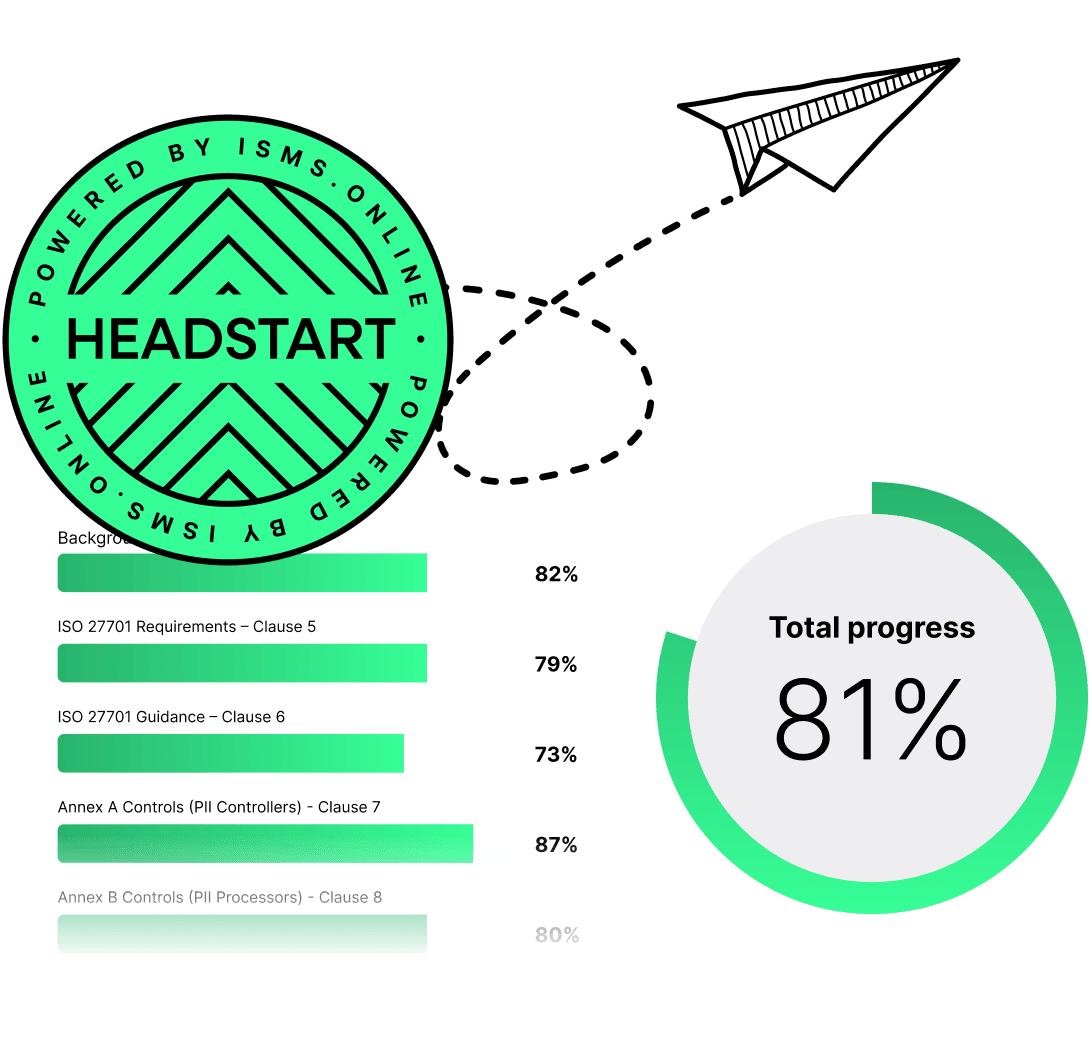
An 81% Headstart from day one
We’ve done the hard work for you, giving you an 81% Headstart from the moment you log on. All you have to do is fill in the blanks.
Why Should You Comply With Annex A.5.30? Key Aspects and Common Challenges
1. Continuity Requirements:
Objective: Identify and document the necessary ICT resources and services required to support critical business functions during a disruption. Ensure these requirements are aligned with the business continuity plan.
Common Challenges: Accurately identifying all critical ICT assets and dependencies can be complex and time-consuming.
Solutions: Use the ISMS.online Risk Management Module’s Risk Bank and Dynamic Risk Map to systematically identify and assess risks related to ICT assets.
Associated ISO Clauses:
- Identify external and internal issues
- Understand the needs and expectations of interested parties
- Determine the scope of the ISMS
2. Redundancy and Failover:
Objective: Implement redundancy for critical ICT components to avoid single points of failure. Ensure failover mechanisms are in place and tested regularly to provide seamless transition during an ICT failure.
Common Challenges: Ensuring comprehensive coverage and regular testing of redundancy mechanisms.
Solutions: Document and manage redundancy and failover plans within the ISMS.online Business Continuity Module.
Associated ISO Clauses:
- Actions to address risks and opportunities
- Information security objectives and planning to achieve them
- Planning of changes
3. Data Backup and Recovery:
Objective: Establish robust data backup procedures to ensure data integrity and availability. Regularly test data recovery processes to verify that data can be restored quickly and accurately in case of data loss.
Common Challenges: Maintaining up-to-date backup processes and ensuring regular testing.
Solutions: Utilise ISMS.online to schedule and document backup and recovery tests, ensuring compliance and readiness.
Associated ISO Clauses:
- Monitoring, measurement, analysis, and evaluation
- Internal audit
- Management review
4. Disaster Recovery Planning:
Objective: Develop and maintain a disaster recovery plan specifically for ICT systems. Ensure the plan includes procedures for recovering ICT infrastructure, applications, and data.
Common Challenges: Creating a comprehensive and current disaster recovery plan.
Solutions: Use ISMS.online’s policy templates and version control to maintain up-to-date disaster recovery plans.
Associated ISO Clauses:
- Actions to address risks and opportunities
- Information security objectives and planning to achieve them
5. Testing and Exercising:
Objective: Conduct regular tests and exercises to validate the effectiveness of the ICT readiness measures. Ensure staff are trained and aware of their roles and responsibilities in the event of a disruption.
Common Challenges: Regularly conducting comprehensive tests and ensuring staff readiness.
Solutions: Schedule and document tests using ISMS.online’s Test Schedules feature, and deliver training through Training Modules.
Associated ISO Clauses:
- Competence
- Awareness
- Communication
6. Monitoring and Review:
Objective: Continuously monitor ICT systems to detect and respond to potential issues before they escalate into major disruptions. Regularly review and update the ICT readiness plan to address changes in technology, business processes, and emerging threats.
Common Challenges: Ensuring continuous monitoring and timely updates to the readiness plan.
Solutions: Leverage the Compliance Module in ISMS.online for continuous monitoring and regular reviews, and use the Audit Management Module to stay compliant with evolving standards and best practices.
Associated ISO Clauses:
- Nonconformity and corrective action
- Continual improvement
Objectives of A.5.30 ICT Readiness for Business Continuity:
- To minimise the impact of ICT disruptions on business operations.
- To ensure critical business functions can continue or be restored quickly during an ICT failure.
- To protect the organisation’s reputation and maintain customer trust by demonstrating resilience and preparedness.

Free yourself from a mountain of spreadsheets
Embed, expand and scale your compliance, without the mess. IO gives you the resilience and confidence to grow securely.
Detailed Annex A.5.30 Compliance Checklist
1. Assessment:
2. Planning:
3. Training:
4. Testing:
5. Review:
ISMS.online Features for Demonstrating Compliance with A.5.30
1. Business Continuity Module:
- Continuity Plans: Create and maintain detailed business continuity plans that include ICT readiness strategies.
- Test Schedules: Schedule and document regular tests of the business continuity and disaster recovery plans.
2. Risk Management Module:
- Risk Bank: Identify and assess risks related to ICT disruptions and document mitigation strategies.
- Dynamic Risk Map: Visualise and monitor risks to ensure continuous readiness and response capabilities.
3. Incident Management Module:
- Incident Tracker: Log and manage incidents, ensuring that any ICT disruptions are recorded and addressed promptly.
- Workflow and Notifications: Automate response procedures and notify relevant personnel during an ICT incident.
4. Policy Management Module:
- Policy Templates and Version Control: Maintain up-to-date policies related to ICT readiness and business continuity.
- Document Access: Ensure all relevant staff have access to the latest versions of continuity and recovery plans.
5. Audit Management Module:
- Audit Templates and Plans: Regularly audit the ICT readiness and business continuity measures to ensure compliance.
- Corrective Actions and Documentation: Track and document any non-conformities and corrective actions taken.
6. Compliance Module:
- Regs Database and Alert System: Stay informed about relevant regulatory requirements and ensure ongoing compliance with ISO 27001:2022 standards.
Benefits of Compliance
Implementing A.5.30 ICT Readiness for Business Continuity involves several critical steps, each with potential challenges. Utilising the comprehensive features of ISMS.online helps to overcome these challenges and ensures robust preparedness, compliance, and resilience against ICT disruptions.
By following the outlined implementation steps, addressing common challenges, and leveraging ISMS.online’s capabilities, organisations can achieve and maintain high standards of business continuity and ICT readiness. This structured approach enhances preparedness, resilience, and operational stability, safeguarding the organisation against ICT disruptions and reinforcing stakeholder trust.

Manage all your compliance, all in one place
ISMS.online supports over 100 standards and regulations, giving you a single platform for all your compliance needs.
Every Annex A Control Checklist Table
| ISO 27001 Control Number | ISO 27001 Control Checklist |
|---|---|
| Annex A.6.1 | Screening Checklist |
| Annex A.6.2 | Terms and Conditions of Employment Checklist |
| Annex A.6.3 | Information Security Awareness, Education and Training Checklist |
| Annex A.6.4 | Disciplinary Process Checklist |
| Annex A.6.5 | Responsibilities After Termination or Change of Employment Checklist |
| Annex A.6.6 | Confidentiality or Non-Disclosure Agreements Checklist |
| Annex A.6.7 | Remote Working Checklist |
| Annex A.6.8 | Information Security Event Reporting Checklist |
| ISO 27001 Control Number | ISO 27001 Control Checklist |
|---|---|
| Annex A.7.1 | Physical Security Perimeters Checklist |
| Annex A.7.2 | Physical Entry Checklist |
| Annex A.7.3 | Securing Offices, Rooms, and Facilities Checklist |
| Annex A.7.4 | Physical Security Monitoring Checklist |
| Annex A.7.5 | Protecting Against Physical and Environmental Threats Checklist |
| Annex A.7.6 | Working in Secure Areas Checklist |
| Annex A.7.7 | Clear Desk and Clear Screen Checklist |
| Annex A.7.8 | Equipment Siting and Protection Checklist |
| Annex A.7.9 | Security of Assets Off-Premises Checklist |
| Annex A.7.10 | Storage Media Checklist |
| Annex A.7.11 | Supporting Utilities Checklist |
| Annex A.7.12 | Cabling Security Checklist |
| Annex A.7.13 | Equipment Maintenance Checklist |
| Annex A.7.14 | Secure Disposal or Re-Use of Equipment Checklist |
How ISMS.online Help With A.5.30
Ready to ensure your organisation’s ICT readiness for business continuity and compliance with ISO 27001:2022? Discover how ISMS.online can streamline your compliance efforts, enhance your business continuity planning, and fortify your ICT systems against disruptions.
See firsthand how our comprehensive suite of features can support your organisation’s needs. Our expert team is ready to guide you through our platform, demonstrate its powerful capabilities, and answer any questions you may have.
Don’t wait—take the first step towards robust ICT readiness and seamless compliance. Contact ISMS.online now to schedule your personalised demo.







