





































ISO 27001 A.6.8 Information Security Event Reporting Checklist
A.6.8 Information Security Event Reporting is a control within the People Controls section of ISO 27001:2022 Annex A. It focuses on ensuring that all information security events are reported in a timely and effective manner. This control is crucial for maintaining a robust information security management system (ISMS) as it helps organisations detect and respond to security incidents promptly, thereby minimising potential damage and enhancing overall security posture.
Scope of Annex A.6.8
The A.6.8 Information Security Event Reporting control mandates that organisations implement a structured and efficient process for reporting information security events.
An information security event is defined as an identified occurrence of a system, service, or network state indicating a possible breach of information security policy or failure of safeguards, or a previously unknown situation that may be security relevant. Effective reporting of such events is fundamental to the proactive management of information security risks and compliance with ISO 27001:2022.
Implementing this control involves several key components, each presenting specific challenges that need to be addressed to ensure compliance. Leveraging the features provided by platforms like ISMS.online can greatly assist in overcoming these challenges and maintaining continuous improvement in event reporting processes.
ISO 27001 made easy
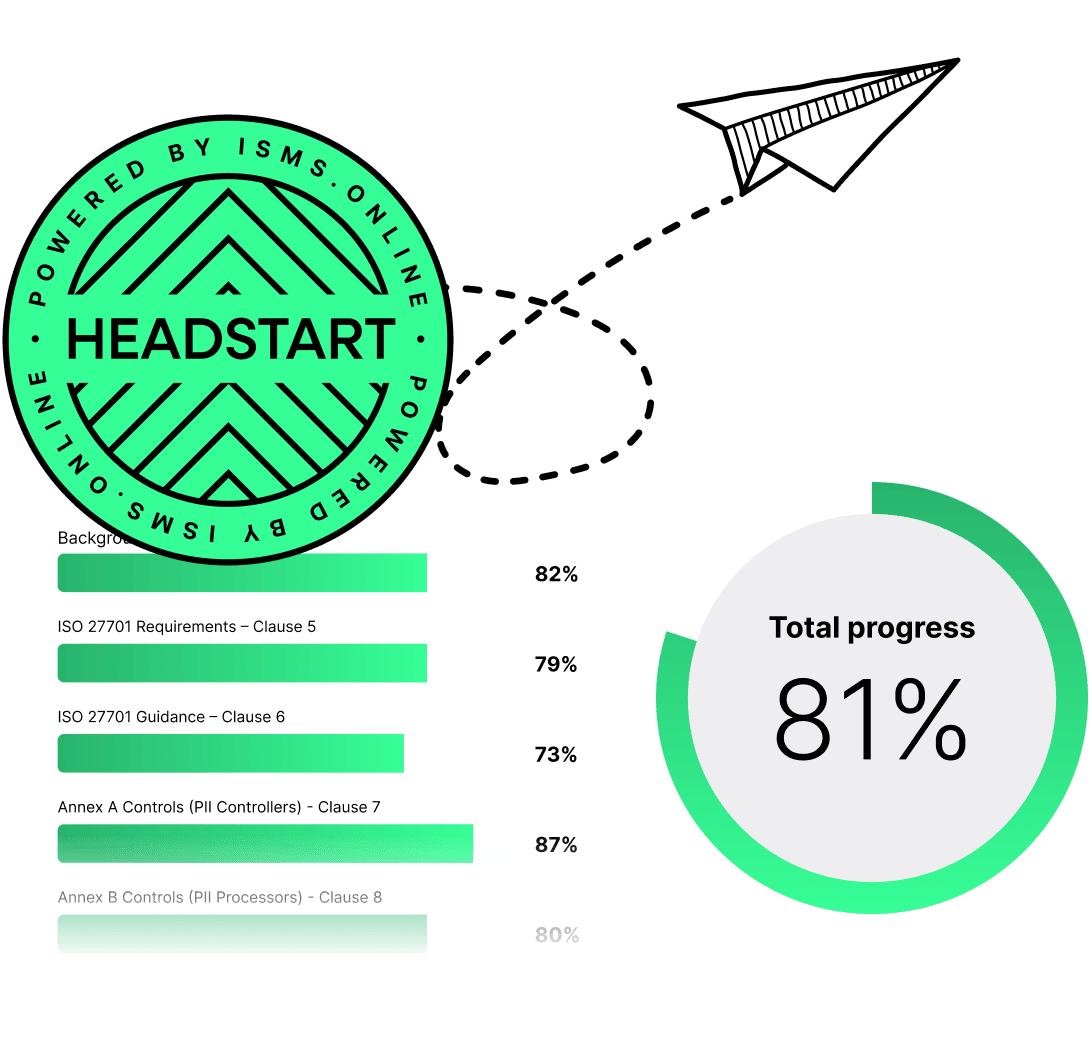
An 81% Headstart from day one
We’ve done the hard work for you, giving you an 81% Headstart from the moment you log on. All you have to do is fill in the blanks.
Why Should You Comply With Annex A.6.8? Key Aspects and Common Challenges
Reporting Mechanism
Definition: Establishing a structured mechanism for reporting information security events is essential. This mechanism should be accessible to all employees and relevant stakeholders to ensure comprehensive coverage.
Implementation: This includes creating user-friendly reporting channels such as hotlines, online forms, and dedicated email addresses.
Challenges:
- User Engagement: Ensuring all employees understand the importance of reporting and are motivated to use the system.
- System Usability: Designing a system that is intuitive and easy to use to encourage regular use.
Solutions:
- Engagement Programmes: Develop awareness programmes and campaigns to highlight the importance of event reporting. Regular reminders and training can keep employees engaged.
- Usability Testing: Conduct usability testing with a sample of employees to ensure the reporting system is easy to use and make necessary adjustments based on feedback.
Related ISO 27001 Clauses: Leadership commitment and support for the ISMS, ensuring adequate resources and competence.
Assessment
Initial Evaluation: Upon receiving a report, the event must be assessed to determine its severity, potential impact, and necessary immediate actions.
Classification: Events should be classified based on predefined criteria such as type, severity, and impact to ensure appropriate handling.
Challenges:
- Consistency: Ensuring consistent application of assessment criteria across all reported events.
- Resource Allocation: Adequately resourcing the team responsible for initial assessment and classification.
Solutions:
- Standardised Criteria: Develop and document standardised criteria for event assessment and classification, and train the relevant teams.
- Resource Planning: Ensure that the team is well-staffed and trained to handle the volume of reports efficiently.
Related ISO 27001 Clauses: Risk assessment and treatment planning.
Response
Action Plan: Develop and implement an action plan to address the reported event, including containment, eradication, and recovery steps.
Coordination: Ensure coordinated response efforts among different departments, such as IT, security, and management, to effectively manage the event.
Challenges:
- Coordination: Facilitating effective communication and coordination among various departments.
- Timeliness: Ensuring timely response to mitigate the impact of the event.
Solutions:
- Incident Response Teams: Form dedicated incident response teams with clearly defined roles and responsibilities to manage the coordination and execution of the response plan.
- Response Drills: Conduct regular drills and simulations to test the response plan and improve timeliness and coordination.
Related ISO 27001 Clauses: Managing risks and incidents, maintaining and improving ISMS effectiveness.
Documentation
Record Keeping: Maintain detailed records of all reported events, including the nature of the event, assessment results, actions taken, and lessons learned.
Compliance: Ensure that documentation complies with organisational policies and relevant legal or regulatory requirements.
Challenges:
- Completeness: Ensuring all relevant details are captured accurately.
- Compliance: Staying compliant with documentation requirements set by regulations and standards.
Solutions:
- Documentation Templates: Use standardised templates for documenting incidents to ensure all necessary details are captured.
- Compliance Monitoring: Regularly review documentation practices to ensure compliance with relevant requirements.
Related ISO 27001 Clauses: Controlling documented information and maintaining records of activities.
Communication
Internal Communication: Inform relevant internal stakeholders about the event and the measures being taken to address it.
External Communication: If necessary, communicate with external parties such as customers, partners, or regulatory bodies, adhering to the organisation’s communication policies.
Challenges:
- Clarity: Ensuring communication is clear and concise to avoid misunderstandings.
- Compliance: Adhering to regulatory requirements for communication.
Solutions:
- Communication Plans: Develop clear internal and external communication plans outlining the steps to be taken during an incident.
- Compliance Checks: Ensure all communications are reviewed for compliance with regulatory and legal requirements before dissemination.
Related ISO 27001 Clauses: Internal and external communication management, ensuring compliance with legal requirements.
Training and Awareness
Training Programmes: Conduct regular training sessions for employees to recognise and report information security events effectively.
Awareness Campaigns: Promote awareness about the importance of reporting information security events and the procedures to follow.
Challenges:
- Engagement: Keeping employees engaged and interested in training programmes.
- Retention: Ensuring information is retained and applied in practice.
Solutions:
- Interactive Training: Use interactive and engaging training methods, such as simulations and workshops, to keep employees interested.
- Regular Refreshers: Conduct regular refresher sessions to reinforce key concepts and practices.
Related ISO 27001 Clauses: Ensuring competence, training, and awareness among employees.
Significance of Compliance
- Early Detection: Enables early identification of potential security threats, reducing the time to respond and mitigate damage.
- Risk Mitigation: Helps in promptly addressing vulnerabilities and preventing further incidents.
- Compliance: Ensures the organisation meets regulatory and legal requirements related to information security event reporting.
- Continuous Improvement: Facilitates the continuous improvement of security measures by analysing reported events and refining response strategies.
By implementing A.6.8 Information Security Event Reporting, organisations can strengthen their overall security posture, enhance incident response capabilities, and foster a culture of security awareness among employees.

Free yourself from a mountain of spreadsheets
Embed, expand and scale your compliance, without the mess. IO gives you the resilience and confidence to grow securely.
ISMS.online Features for Demonstrating Compliance with A.6.8
To demonstrate compliance with A.6.8 Information Security Event Reporting, ISMS.online provides several useful features:
- Incident Management:
- Incident Tracker: Enables the logging and tracking of information security events from initial report through resolution.
- Workflow Management: Automates the process of assessing, categorising, and responding to incidents, ensuring consistent and timely actions.
- Notifications: Sends automated alerts to relevant stakeholders about new incidents, status updates, and required actions.
- Policy Management:
- Policy Templates: Provides templates for creating information security event reporting policies, ensuring they meet ISO 27001 standards.
- Policy Pack: Allows for the distribution and acknowledgment tracking of policies, ensuring all employees are aware of reporting procedures.
- Audit Management:
- Audit Templates: Offers templates for conducting internal audits on incident reporting processes to ensure compliance and identify areas for improvement.
- Corrective Actions: Tracks and manages corrective actions resulting from audits, ensuring continuous improvement in reporting processes.
- Compliance Management:
- Regs Database: Keeps track of relevant regulations and standards, ensuring incident reporting policies and procedures are up-to-date.
- Alert System: Notifies the organisation of changes in regulations that might impact incident reporting requirements.
- Communication Tools:
- Collaboration Tools: Facilitates internal communication and coordination among teams during the incident response process.
- Alert System: Ensures timely communication to external parties if necessary, adhering to regulatory and contractual obligations.
- Training Modules:
- Training Programmes: Provides structured training modules to educate employees on recognising and reporting information security events.
- Training Tracking: Monitors training completion and effectiveness, ensuring all employees are adequately prepared to report incidents.
By leveraging these ISMS.online features, organisations can effectively demonstrate compliance with A.6.8 Information Security Event Reporting, ensuring robust incident reporting mechanisms are in place and continuously improved.
Detailed Annex A.6.8 Compliance Checklist
Establishing a Reporting Mechanism
- Create an easy-to-use reporting system (e.g., hotlines, online forms, email addresses) for reporting information security events.
- Ensure the reporting system is accessible to all employees.
- Train employees on how to use the reporting system.
- Develop awareness programmes and campaigns to highlight the importance of event reporting.
Assessment
- Develop criteria for initial evaluation and classification of reported events.
- Ensure consistency in applying assessment criteria across all reported events.
- Allocate adequate resources for the team responsible for initial assessment and classification.
- Conduct usability testing with a sample of employees to ensure the reporting system is easy to use.
Response
- Develop an action plan template for responding to reported events, including containment, eradication, and recovery steps.
- Ensure coordinated response efforts among different departments.
- Monitor the timeliness of responses to mitigate the impact of events.
- Form dedicated incident response teams with clearly defined roles and responsibilities.
- Conduct regular drills and simulations to test the response plan.
Documentation
- Maintain detailed records of all reported events, including the nature of the event, assessment results, actions taken, and lessons learned.
- Ensure documentation complies with organisational policies and relevant legal or regulatory requirements.
- Use standardised templates for documenting incidents to ensure all necessary details are captured.
- Regularly review documentation practices to ensure compliance with relevant requirements.
Communication
- Develop a communication plan for informing relevant internal stakeholders about events and response measures.
- Establish protocols for external communication with customers, partners, or regulatory bodies when necessary.
- Ensure clarity and compliance in all communications related to information security events.
- Ensure all communications are reviewed for compliance with regulatory and legal requirements before dissemination.
Training and Awareness
- Conduct regular training sessions for employees on recognising and reporting information security events.
- Promote awareness about the importance of reporting information security events and the procedures to follow.
- Track the completion and effectiveness of training programmes.
- Use interactive and engaging training methods, such as simulations and workshops, to keep employees interested.
- Conduct regular refresher sessions to reinforce key concepts and practices.
By following this detailed compliance checklist and utilising the features provided by ISMS.online, organisations can ensure they meet the requirements of A.6.8 Information Security Event Reporting and maintain a strong security posture.

Manage all your compliance, all in one place
ISMS.online supports over 100 standards and regulations, giving you a single platform for all your compliance needs.
Every Annex A Control Checklist Table
| ISO 27001 Control Number | ISO 27001 Control Checklist |
|---|---|
| Annex A.6.1 | Screening Checklist |
| Annex A.6.2 | Terms and Conditions of Employment Checklist |
| Annex A.6.3 | Information Security Awareness, Education and Training Checklist |
| Annex A.6.4 | Disciplinary Process Checklist |
| Annex A.6.5 | Responsibilities After Termination or Change of Employment Checklist |
| Annex A.6.6 | Confidentiality or Non-Disclosure Agreements Checklist |
| Annex A.6.7 | Remote Working Checklist |
| Annex A.6.8 | Information Security Event Reporting Checklist |
| ISO 27001 Control Number | ISO 27001 Control Checklist |
|---|---|
| Annex A.7.1 | Physical Security Perimeters Checklist |
| Annex A.7.2 | Physical Entry Checklist |
| Annex A.7.3 | Securing Offices, Rooms, and Facilities Checklist |
| Annex A.7.4 | Physical Security Monitoring Checklist |
| Annex A.7.5 | Protecting Against Physical and Environmental Threats Checklist |
| Annex A.7.6 | Working in Secure Areas Checklist |
| Annex A.7.7 | Clear Desk and Clear Screen Checklist |
| Annex A.7.8 | Equipment Siting and Protection Checklist |
| Annex A.7.9 | Security of Assets Off-Premises Checklist |
| Annex A.7.10 | Storage Media Checklist |
| Annex A.7.11 | Supporting Utilities Checklist |
| Annex A.7.12 | Cabling Security Checklist |
| Annex A.7.13 | Equipment Maintenance Checklist |
| Annex A.7.14 | Secure Disposal or Re-Use of Equipment Checklist |
How ISMS.online Help With A.6.8
Ready to elevate your information security management system and ensure compliance with ISO 27001:2022?
Contact ISMS.online today and book a demo to see how our comprehensive platform can streamline your information security event reporting, enhance your security posture, and support your organisation’s continuous improvement efforts.
Take the next step towards robust information security management. Book your demo now and experience the difference with ISMS.online!






