





































ISO 27001 A.8.7 Protection Against Malware Checklist
A.8.7 Protection Against Malware in the ISO/IEC 27001:2022 standard is a critical control requiring comprehensive measures to prevent, detect, and respond to malware threats. Malware, including viruses, ransomware, spyware, and other malicious software, poses significant risks to information security, potentially disrupting business operations, compromising sensitive data, and causing financial losses.
Implementing robust anti-malware strategies involves several key components and addressing specific challenges that a Chief Information Security Officer (CISO) might encounter.
This detailed guide outlines the implementation of A.8.7, identifies common challenges, provides solutions, and describes how ISMS.online can support these efforts. Additionally, a comprehensive compliance checklist is provided to help organisations demonstrate adherence to this control.
ISO 27001 made easy
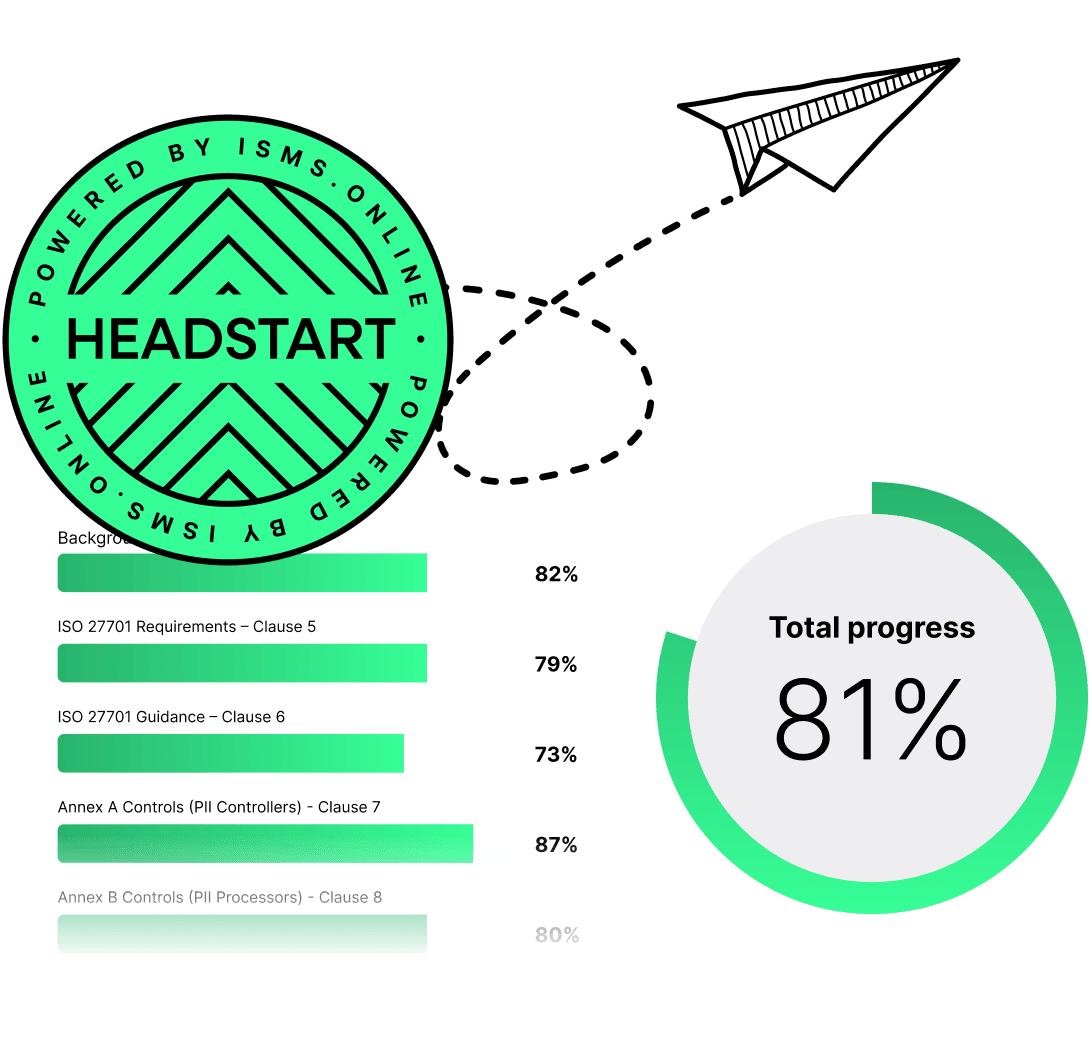
An 81% Headstart from day one
We’ve done the hard work for you, giving you an 81% Headstart from the moment you log on. All you have to do is fill in the blanks.
Why Should You Comply With Annex A.8.7? Key Aspects and Common Challenges
1. Preventive Measures:
Anti-malware Software:
- Resource Allocation: Comprehensive deployment across all systems, including personal devices and remote workstations.
- Software Compatibility: Addressing compatibility with legacy systems or specialised software.
- Keeping Up with Evolving Threats: Regular updates to counteract rapidly evolving malware threats.
- Solutions:
- Conduct a thorough asset inventory to identify all devices needing protection.
- Implement a centralised management system for anti-malware software to streamline updates and deployment.
- Schedule regular reviews and updates of anti-malware definitions and software.
- Related ISO 27001 Clauses: Context of the Organisation, Leadership, Planning, Support, Operation
Challenges:
Security Awareness Training:
- Employee Engagement: Engaging all employees, including non-technical staff.
- Consistency: Delivering uniform training across various teams and locations.
- Measuring Effectiveness: Developing metrics to evaluate training impact.
- Solutions:
- Utilise engaging training methods such as interactive sessions, simulations, and real-life case studies.
- Standardise training content to ensure consistency and relevance across all departments.
- Implement pre- and post-training assessments to measure knowledge retention and training effectiveness.
- Related ISO 27001 Clauses: Leadership, Planning, Support, Operation
Challenges:
2. Detection and Monitoring:
Real-time Monitoring:
- Alert Fatigue: Managing high volumes of alerts without overlooking critical threats.
- Advanced Detection Capabilities: Ensuring systems can detect sophisticated malware.
- Integration with Existing Systems: Seamlessly integrating new monitoring tools.
- Solutions:
- Implement adaptive security analytics to prioritise alerts based on severity and potential impact.
- Use behaviour-based detection systems to identify unusual activities indicative of advanced malware.
- Ensure compatibility and integration of monitoring tools with existing IT infrastructure to provide comprehensive coverage.
- Related ISO 27001 Clauses: Operation, Performance Evaluation
Challenges:
Regular Scanning:
- Scheduling and Execution: Balancing thorough scanning with minimal operational disruption.
- Comprehensive Coverage: Including all systems, even those used remotely.
- Solutions:
- Schedule scans during off-peak hours to minimise operational impact.
- Use automated scanning tools that can be scheduled and run without manual intervention.
- Ensure all devices, including mobile and remote devices, are included in the scanning schedules.
- Related ISO 27001 Clauses: Operation, Performance Evaluation
Challenges:
3. Response and Recovery:
Incident Response Procedures:
- Speed of Response: Establishing rapid response protocols.
- Coordination Across Teams: Ensuring effective coordination during incidents.
- Documentation and Reporting: Maintaining thorough documentation.
- Solutions:
- Develop and regularly update a detailed incident response plan outlining roles, responsibilities, and procedures.
- Conduct regular incident response drills to ensure all teams are prepared and can coordinate effectively.
- Implement a centralised incident management system to document and track all response activities.
- Related ISO 27001 Clauses: Operation, Performance Evaluation, Improvement
Challenges:
Data Backup and Recovery:
- Backup Integrity: Protecting backups from malware.
- Meeting Recovery Time Objectives (RTOs): Ensuring recovery processes meet RTOs.
- Regular Testing: Conducting regular backup and recovery tests.
- Solutions:
- Use immutable backups that cannot be altered or deleted by malware.
- Define clear RTOs and ensure backup and recovery processes are designed to meet these objectives.
- Schedule and conduct regular tests of backup and recovery procedures to validate their effectiveness.
- Related ISO 27001 Clauses: Operation, Performance Evaluation, Improvement
Challenges:
4. Continuous Improvement:
Policy and Procedure Updates:
- Staying Current: Keeping policies up-to-date with the latest threats.
- Change Management: Managing policy changes effectively.
- Balancing Security and Usability: Implementing effective security measures without hindering productivity.
- Solutions:
- Establish a regular review cycle for all security policies and procedures to ensure they are current.
- Implement a change management process to manage and communicate updates effectively.
- Engage stakeholders in policy development to balance security requirements with business needs.
- Related ISO 27001 Clauses: Planning, Support, Operation, Improvement
Challenges:
Security Audits:
- Audit Fatigue: Managing resources and potential disruptions.
- Objective Assessment: Ensuring thorough and unbiased audits.
- Addressing Findings: Promptly addressing audit findings.
- Solutions:
- Schedule audits at intervals that balance thorough assessment with operational demands.
- Use external auditors to ensure objectivity and comprehensive evaluation.
- Develop a process for tracking and addressing audit findings to ensure timely remediation.
- Related ISO 27001 Clauses: Performance Evaluation, Improvement
Challenges:

Free yourself from a mountain of spreadsheets
Embed, expand and scale your compliance, without the mess. IO gives you the resilience and confidence to grow securely.
ISMS.online Features for Demonstrating Compliance with A.8.7
- Incident Management:
- Incident Tracker: Logs and manages malware incidents efficiently, ensuring a structured response.
- Workflow Automation: Facilitates quick and consistent incident response, essential for containing malware spread.
- Policy Management:
- Policy Templates and Version Control: Provides up-to-date policies, ensuring comprehensive malware protection strategies are in place.
- Document Access Management: Facilitates controlled access to policies, ensuring only authorised personnel can view or modify sensitive documents.
- Risk Management:
- Dynamic Risk Map: Visualises risks and their mitigations, helping to prioritise actions based on the most significant threats.
- Risk Monitoring: Continuously assesses the effectiveness of implemented controls and identifies emerging threats.
- Training and Awareness:
- Training Modules: Provides structured and customisable training programmes to educate staff about malware threats, safe computing practices, and the organisation’s specific policies and procedures.
- Assessment and Tracking: Includes tools to assess employee understanding and compliance with training, and to track completion rates and feedback, ensuring continuous improvement in security awareness.
- Audit Management:
- Audit Plan and Corrective Actions: Supports the planning and execution of regular audits, helping to identify and address vulnerabilities in the anti-malware defences. Corrective actions are documented and tracked, ensuring that issues are resolved effectively.
- Compliance Tracking:
- Regs Database and Alert System: Provides a comprehensive database of relevant regulations and standards, along with an alert system to notify stakeholders of changes. This feature helps ensure ongoing compliance with legal and regulatory requirements related to malware protection.
Detailed Annex A.8.7 Compliance Checklist
Preventive Measures:
- Deploy Anti-malware Software:
- Install comprehensive anti-malware tools across all endpoints.
- Schedule regular updates and scans to counteract the latest threats.
- Ensure compatibility with existing systems and infrastructure.
- Implement Security Awareness Training:
- Deliver interactive and engaging training sessions to all employees.
- Standardise training content to ensure consistency and relevance.
- Use assessments to measure the effectiveness and impact of training programmes.
Detection and Monitoring:
- Establish Real-time Monitoring:
- Implement advanced detection tools capable of identifying subtle threats.
- Set appropriate thresholds to reduce alert fatigue and focus on genuine threats.
- Ensure compatibility and integration of monitoring tools with existing IT infrastructure.
- Schedule Regular Scanning:
- Plan scans during off-peak hours to minimise operational impact.
- Include all devices, including mobile and remote devices, in the scanning schedules.
Response and Recovery:
- Develop Incident Response Procedures:
- Define clear and detailed response protocols for different types of malware incidents.
- Conduct regular drills and simulations to ensure preparedness.
- Document all response actions thoroughly for compliance and analysis.
- Ensure Data Backup and Recovery:
- Secure backup systems against malware threats, particularly ransomware.
- Define clear RTOs and ensure recovery processes can meet these objectives.
- Regularly test backup and recovery processes to validate their effectiveness.
Continuous Improvement:
- Regularly Update Policies and Procedures:
- Keep policies and procedures aligned with the latest threat landscape and regulatory requirements.
- Manage and communicate policy changes effectively across the organisation.
- Balance the implementation of security measures with the need to maintain operational efficiency.
- Conduct Security Audits:
- Schedule audits in a way that minimises disruption while ensuring thorough assessments.
- Ensure audits are conducted by unbiased and qualified auditors.
- Promptly address and remediate findings from audits to enhance security measures.

Manage all your compliance, all in one place
ISMS.online supports over 100 standards and regulations, giving you a single platform for all your compliance needs.
Every Annex A Control Checklist Table
| ISO 27001 Control Number | ISO 27001 Control Checklist |
|---|---|
| Annex A.6.1 | Screening Checklist |
| Annex A.6.2 | Terms and Conditions of Employment Checklist |
| Annex A.6.3 | Information Security Awareness, Education and Training Checklist |
| Annex A.6.4 | Disciplinary Process Checklist |
| Annex A.6.5 | Responsibilities After Termination or Change of Employment Checklist |
| Annex A.6.6 | Confidentiality or Non-Disclosure Agreements Checklist |
| Annex A.6.7 | Remote Working Checklist |
| Annex A.6.8 | Information Security Event Reporting Checklist |
| ISO 27001 Control Number | ISO 27001 Control Checklist |
|---|---|
| Annex A.7.1 | Physical Security Perimeters Checklist |
| Annex A.7.2 | Physical Entry Checklist |
| Annex A.7.3 | Securing Offices, Rooms, and Facilities Checklist |
| Annex A.7.4 | Physical Security Monitoring Checklist |
| Annex A.7.5 | Protecting Against Physical and Environmental Threats Checklist |
| Annex A.7.6 | Working in Secure Areas Checklist |
| Annex A.7.7 | Clear Desk and Clear Screen Checklist |
| Annex A.7.8 | Equipment Siting and Protection Checklist |
| Annex A.7.9 | Security of Assets Off-Premises Checklist |
| Annex A.7.10 | Storage Media Checklist |
| Annex A.7.11 | Supporting Utilities Checklist |
| Annex A.7.12 | Cabling Security Checklist |
| Annex A.7.13 | Equipment Maintenance Checklist |
| Annex A.7.14 | Secure Disposal or Re-Use of Equipment Checklist |
How ISMS.online Help With A.8.7
Are you ready to strengthen your organisation’s defences against malware threats and ensure compliance with ISO 27001:2022?
At ISMS.online, we offer a comprehensive platform that simplifies the management of your Information Security Management System (ISMS), including advanced tools for malware protection, policy management, incident response, and more.
Don’t leave your organisation’s security to chance. Experience the benefits of our integrated approach to managing information security risks and compliance requirements. Our intuitive platform is designed to streamline your security processes, enhance your team’s efficiency, and ensure you stay ahead of emerging threats.
Contact us today to book a personalised demo and see how ISMS.online can transform your approach to information security management.






