





































ISO 27001 A.5.3 Segregation of Duties Checklist
The Segregation of Duties (SoD) control within ISO 27001:2022 is a fundamental security principle designed to prevent errors, fraud, and unauthorised activities by ensuring that critical tasks are distributed among multiple individuals. Implementing SoD establishes a system of checks and balances, enhancing security and operational integrity. This control is crucial for maintaining a secure and compliant Information Security Management System (ISMS).
The primary goal of the SoD control is to minimise the risk of intentional and unintentional errors, fraud, and misuse of information by ensuring that no single individual has control over all aspects of any critical function. This is achieved by distributing responsibilities and establishing a robust oversight mechanism.
ISO 27001 made easy
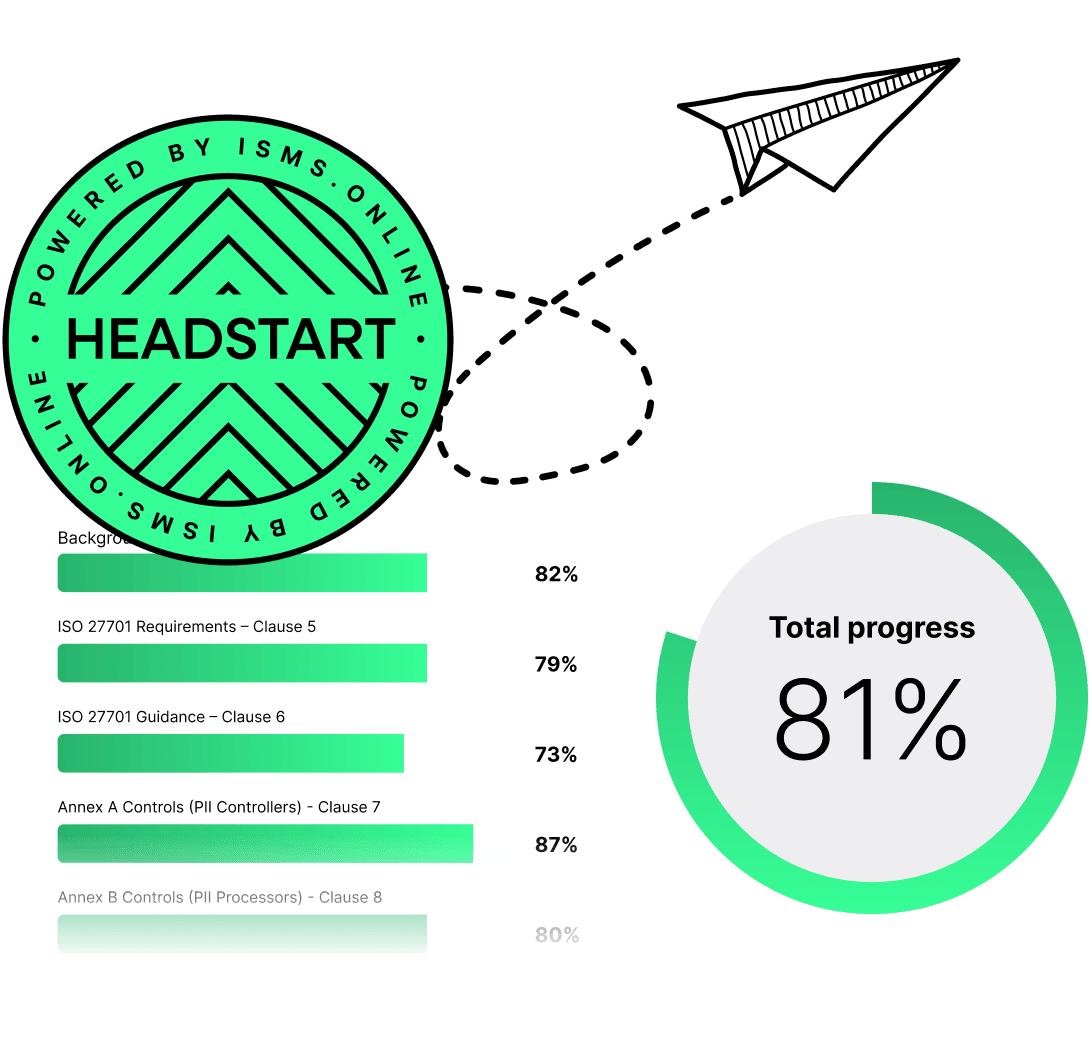
An 81% Headstart from day one
We’ve done the hard work for you, giving you an 81% Headstart from the moment you log on. All you have to do is fill in the blanks.
Why Should You Comply With Annex A.5.3? Key Aspects and Common Challenges
Role Definition
Description: Clearly define roles and responsibilities within the organisation to prevent conflict of interest.
Challenges:
- Role Ambiguity: Avoiding overlaps and gaps in role definitions.
- Resistance to Change: Overcoming resistance from employees regarding changes to their roles.
Solutions:
- Develop comprehensive role descriptions and regularly review and update them.
- Engage stakeholders early to gain buy-in and reduce resistance.
- Use change management practices to facilitate smooth transitions in role assignments.
Associated Clauses: Context of the organisation, Leadership and commitment, Organisational roles, responsibilities, and authorities.
Access Control
Description: Implement access controls to ensure individuals perform actions within their designated roles, using least privilege principles.
Challenges:
- Technical Limitations: Integrating new access control measures with existing systems.
- Access Creep: Users accumulating permissions they no longer need.
Solutions:
- Conduct regular access reviews to ensure permissions are appropriate.
- Implement automated tools to manage and monitor access rights.
- Integrate access controls with existing systems using standardised protocols and APIs.
Associated Clauses: Information security objectives, Planning of changes, Access control.
Monitoring and Auditing
Description: Regularly monitor activities and review logs to detect unauthorised actions. Conduct periodic audits to ensure compliance with segregation policies.
Challenges:
- Resource Intensive: Requiring significant resources and expertise for continuous monitoring and auditing.
- Data Overload: Managing large volumes of audit logs.
Solutions:
- Use automated monitoring and logging tools to streamline data collection and analysis.
- Allocate dedicated resources and training for monitoring and audit functions.
- Prioritise high-risk areas for more frequent audits.
Associated Clauses: Monitoring, measurement, analysis and evaluation, Internal audit, Performance evaluation.
Policy Enforcement
Description: Develop and enforce policies that support SoD. Ensure employees are aware of these policies and understand their importance.
Challenges:
- Policy Dissemination: Ensuring all employees are aware of and understand the policies.
- Consistency: Maintaining consistent enforcement across departments.
Solutions:
- Use centralised platforms to disseminate and track policy acknowledgements.
- Conduct regular training sessions to reinforce policy awareness.
- Implement consistent enforcement mechanisms and regularly review policy adherence.
Associated Clauses: Communication, Documented information, Awareness.
Training and Awareness
Description: Provide training on the importance of SoD and how it helps prevent fraud and errors. Regularly update training materials to reflect policy changes.
Challenges:
- Engagement: Keeping employees engaged and motivated to complete training programmes.
- Relevance: Ensuring training materials are relevant and up-to-date.
Solutions:
- Develop interactive and role-specific training modules.
- Use gamification techniques to enhance engagement.
- Regularly update training content to reflect current policies and real-world scenarios.
Associated Clauses: Competence, Awareness, Training.

Free yourself from a mountain of spreadsheets
Embed, expand and scale your compliance, without the mess. IO gives you the resilience and confidence to grow securely.
ISMS.online Features for Demonstrating Compliance with A.5.3
- Role-Based Access Control (RBAC): Define and manage user roles to ensure access is granted based on the principle of least privilege. Track and document access rights assignments to demonstrate compliance.
- Policy Management: Utilise policy templates and version control to create, update, and communicate SoD policies. Ensure all employees have acknowledged understanding of these policies through tracking and reporting features.
- Audit Management: Plan, execute, and document internal audits to review compliance with SoD. Use corrective action tracking to address any identified issues promptly.
- Incident Management: Track and manage incidents related to SoD violations. Implement workflow automation for incident response and ensure timely resolution.
- Training Management: Develop and deliver targeted training modules on SoD. Track completion and effectiveness of training programmes to ensure all employees are well-informed.
- Compliance Tracking: Monitor compliance with SoD through automated compliance tracking and reporting tools. Use performance metrics and dashboards to provide real-time visibility into compliance status.
Benefits
- Risk Reduction: Minimises the risk of fraud, errors, and unauthorised actions by distributing tasks among multiple individuals.
- Enhanced Security: Improves overall security posture by ensuring critical processes are not controlled by a single person.
- Compliance: Helps organisations comply with regulatory requirements and standards that mandate SoD.
Implementation Tips
- Identify Critical Functions: Determine which functions are critical to the organisation and require segregation.
- Assign Responsibilities Appropriately: Ensure roles are assigned in a way that separates critical tasks.
- Review and Adjust: Continuously review and adjust roles and access rights as needed to respond to changes in the organisation or environment.
Detailed Annex A.5.3 Compliance Checklist
Role Definition
Access Control
Monitoring and Auditing
Policy Enforcement
Training and Awareness

Manage all your compliance, all in one place
ISMS.online supports over 100 standards and regulations, giving you a single platform for all your compliance needs.
Protect Your Organisation
Segregation of Duties is an essential control in an organisation’s information security management system (ISMS) as it ensures a balanced distribution of responsibilities, reducing the potential for abuse or error, and enhancing overall security. Leveraging ISMS.online features such as role-based access control, policy management, audit management, incident management, training management, and compliance tracking, organisations can effectively demonstrate compliance with A.5.3 and maintain a robust security framework.
Addressing common challenges head-on with these tools ensures successful implementation and sustained compliance. By following the detailed compliance checklist, organisations can systematically approach SoD implementation and maintain ongoing compliance with ISO 27001:2022 standards.
Every Annex A Control Checklist Table
| ISO 27001 Control Number | ISO 27001 Control Checklist |
|---|---|
| Annex A.6.1 | Screening Checklist |
| Annex A.6.2 | Terms and Conditions of Employment Checklist |
| Annex A.6.3 | Information Security Awareness, Education and Training Checklist |
| Annex A.6.4 | Disciplinary Process Checklist |
| Annex A.6.5 | Responsibilities After Termination or Change of Employment Checklist |
| Annex A.6.6 | Confidentiality or Non-Disclosure Agreements Checklist |
| Annex A.6.7 | Remote Working Checklist |
| Annex A.6.8 | Information Security Event Reporting Checklist |
| ISO 27001 Control Number | ISO 27001 Control Checklist |
|---|---|
| Annex A.7.1 | Physical Security Perimeters Checklist |
| Annex A.7.2 | Physical Entry Checklist |
| Annex A.7.3 | Securing Offices, Rooms, and Facilities Checklist |
| Annex A.7.4 | Physical Security Monitoring Checklist |
| Annex A.7.5 | Protecting Against Physical and Environmental Threats Checklist |
| Annex A.7.6 | Working in Secure Areas Checklist |
| Annex A.7.7 | Clear Desk and Clear Screen Checklist |
| Annex A.7.8 | Equipment Siting and Protection Checklist |
| Annex A.7.9 | Security of Assets Off-Premises Checklist |
| Annex A.7.10 | Storage Media Checklist |
| Annex A.7.11 | Supporting Utilities Checklist |
| Annex A.7.12 | Cabling Security Checklist |
| Annex A.7.13 | Equipment Maintenance Checklist |
| Annex A.7.14 | Secure Disposal or Re-Use of Equipment Checklist |
How ISMS.online Help With A.5.3
Ready to enhance your organisation’s security posture and achieve seamless compliance with ISO 27001:2022?
Contact ISMS.online today to book a demo and discover how our comprehensive platform can help you implement and manage Segregation of Duties and other critical controls. Our experts are here to guide you through the process and ensure your ISMS is robust, efficient, and compliant. Don’t wait—secure your future now!







