





































ISO 27001 A.5.8 Information Security in Project Management Checklist
Integrating information security into project management is crucial to safeguarding an organisation’s assets and ensuring compliance with ISO 27001:2022. A.5.8 emphasises the necessity of embedding information security practices throughout the project lifecycle.
This control addresses the identification and management of information security risks, the assignment of roles and responsibilities, the allocation of resources, the implementation of security controls, continuous monitoring and reporting, training and awareness, and adherence to legal and regulatory requirements.
By ensuring these aspects are integrated into project management, organisations can mitigate risks, enhance compliance, and protect their reputation.
ISO 27001 made easy
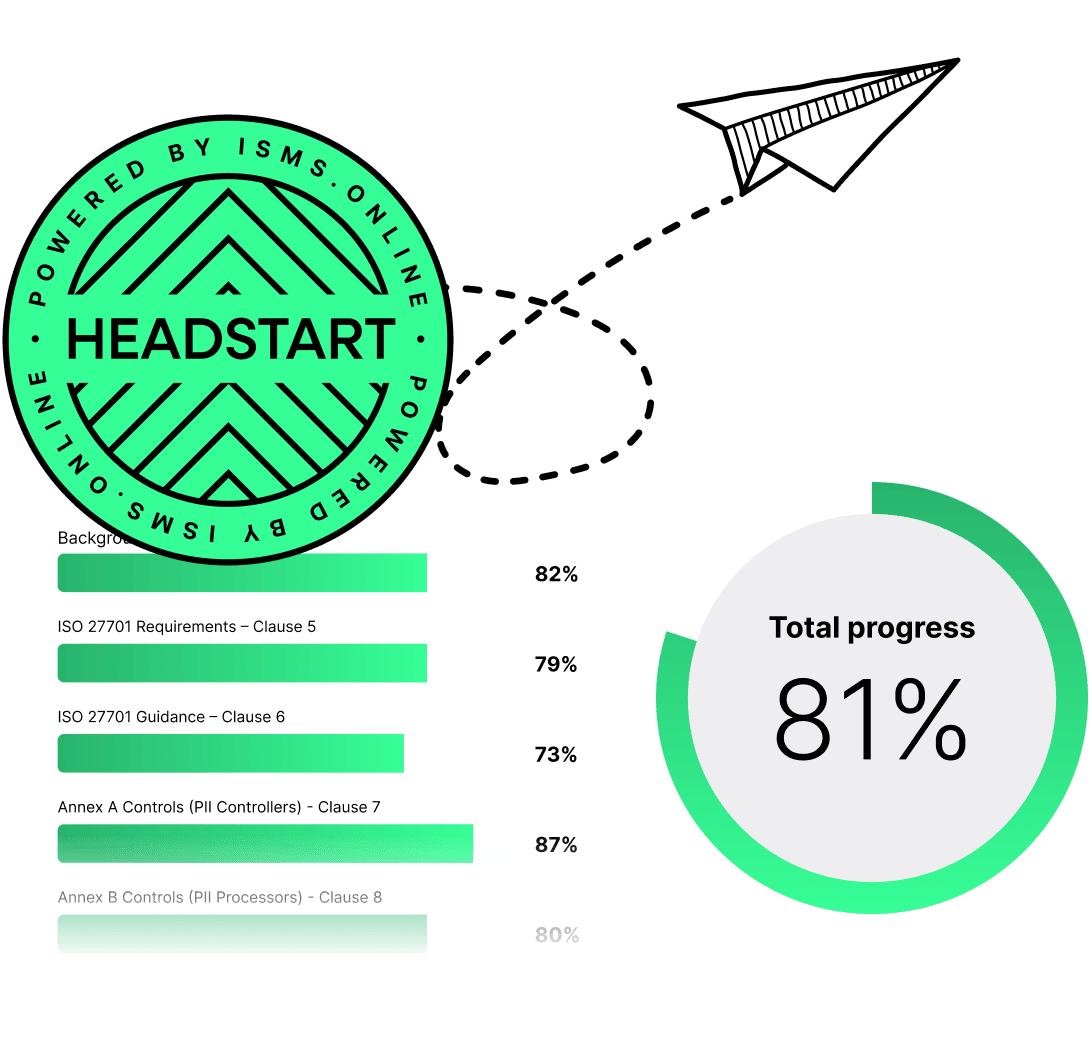
An 81% Headstart from day one
We’ve done the hard work for you, giving you an 81% Headstart from the moment you log on. All you have to do is fill in the blanks.
Why Should You Comply With Annex A.5.8? Key Aspects and Common Challenges
1. Inclusion in Project Planning:
- Requirements Identification:
- Solution: Implement ISMS.online’s Policy Templates to ensure security policies are integrated from the start.
- Example: Develop a checklist to identify security requirements early in the project lifecycle.
- Alignment with Security Objectives:
- Solution: Use the Policy Pack to align security objectives with project goals seamlessly.
- Example: Regular meetings to ensure alignment between project and security teams.
Related Clauses: 6.1, 6.2
2. Risk Management:
- Risk Assessment:
- Solution: Utilise the Risk Bank and Dynamic Risk Map to identify and manage risks effectively.
- Example: Conduct workshops to identify and assess risks with key stakeholders.
Challenge: Identifying all potential security risks comprehensively. - Risk Treatment:
- Solution: Leverage ISMS.online’s Dynamic Risk Map for visualising and prioritising risk treatments.
- Example: Prioritise risk treatment plans based on impact and likelihood.
Challenge: Implementing risk treatment plans amidst other project priorities.
Related Clauses: 6.1.2, 6.1.3, 8.2, 8.3
3. Roles and Responsibilities:
- Definition and Clarity:
- Solution: Clearly define and communicate roles using ISMS.online’s Policy Management features.
- Example: Create role descriptions and responsibility matrices.
Challenge: Ensuring all project members understand their security roles. - Awareness and Accountability:
- Solution: Use Training Tracking to monitor and ensure role-specific training and awareness.
- Example: Regularly scheduled training sessions and follow-up assessments.
Challenge: Maintaining ongoing awareness and accountability.
Related Clauses: 5.3, 7.2, 7.3
4. Resource Allocation:
- Budgeting and Personnel:
- Solution: Plan resource allocation with ISMS.online’s Resource Management tools to justify and manage budgets effectively.
- Example: Develop detailed budget plans that include security resources.
Challenge: Securing sufficient resources dedicated to security amidst budget constraints. - Access to Tools and Expertise:
- Solution: Ensure access to necessary tools and expertise through Policy Management and Training Modules.
- Example: Implement a process for acquiring necessary security tools and expertise.
Challenge: Limited access to the necessary tools and security expertise.
Related Clauses: 7.1, 7.2, 7.3
5. Security Controls Implementation:
- Control Integration:
- Solution: Use ISMS.online’s Control Implementation features to integrate controls smoothly.
- Example: Develop a timeline that includes security control integration.
Challenge: Integrating appropriate controls into project deliverables without disrupting project timelines. - Consistency with Policies:
- Solution: Leverage Policy Templates and Policy Pack for maintaining consistency.
- Example: Regular policy reviews to ensure alignment with controls.
Challenge: Ensuring controls are consistent with organisational policies.
Related Clauses: 8.1
6. Monitoring and Reporting:
- Continuous Monitoring:
- Solution: Implement Real-Time Monitoring and Alert Systems provided by ISMS.online.
- Example: Set up dashboards for real-time monitoring of security metrics.
Challenge: Maintaining continuous monitoring of security aspects. - Regular Reporting:
- Solution: Use Compliance Management features for automated reporting and alerts.
- Example: Schedule regular reporting intervals and automated alerts.
Challenge: Ensuring timely and accurate security status reporting.
Related Clauses: 9.1, 9.2, 9.3
7. Training and Awareness:
- Program Delivery:
- Solution: Utilise Training Modules and Content Management on ISMS.online.
- Example: Create engaging and interactive training programmes.
Challenge: Developing and delivering effective training programmes. - Ongoing Education:
- Solution: Regularly update and track training using Training Tracking.
- Example: Implement continuous learning modules for ongoing education.
Challenge: Keeping the team updated with the latest security threats and practices.
Related Clauses: 7.2, 7.3
8. Compliance:
- Legal and Regulatory Adherence:
- Solution: Access and track regulatory requirements using ISMS.online’s Regs Database.
- Example: Maintain a compliance calendar to track regulatory changes.
Challenge: Ensuring adherence to all relevant regulations and requirements. - Documentation and Evidence:
- Solution: Use Document Templates and Version Control to maintain and evidence compliance.
- Example: Regularly audit documentation for completeness and accuracy.
Challenge: Maintaining comprehensive documentation of compliance efforts.
Related Clauses: 4.2, 7.5, 10.1

Free yourself from a mountain of spreadsheets
Embed, expand and scale your compliance, without the mess. IO gives you the resilience and confidence to grow securely.
ISMS.online Features for Demonstrating Compliance with A.5.8
1. Risk Management:
- Risk Bank: A centralised repository to identify and manage risks associated with the project.
- Dynamic Risk Map: Visualise risk assessments and treatment plans, ensuring all identified risks are managed effectively.
2. Policy Management:
- Policy Templates: Pre-built templates to create and maintain security policies relevant to project management.
- Policy Pack: Comprehensive packages that ensure all necessary policies are in place and communicated to the project team.
3. Incident Management:
- Incident Tracker: Track and manage security incidents related to the project, ensuring swift and effective responses.
- Workflow & Notifications: Streamline the incident response process with automated workflows and notifications.
4. Audit Management:
- Audit Templates: Standardised templates for conducting security audits within the project lifecycle.
- Audit Plan & Corrective Actions: Plan and execute audits, document findings, and track corrective actions.
5. Compliance Management:
- Regs Database: Access a database of relevant regulations to ensure project compliance.
- Alert System & Reporting: Stay updated with compliance requirements and generate reports to demonstrate adherence.
6. Training Management:
- Training Modules: Deliver security awareness and training programmes to project team members.
- Training Tracking: Monitor and document training progress, ensuring all members are adequately trained.
7. Documentation Management:
- Doc Templates & Version Control: Use templates to create security documentation and maintain version control for audit trails.
- Collaboration Tools: Facilitate secure collaboration and document sharing among project stakeholders.
8. Communication:
- Alert System & Notification System: Ensure timely communication of security policies, updates, and incidents to relevant stakeholders.
- Collaboration Tools: Enhance team communication and coordination through integrated tools.

Manage all your compliance, all in one place
ISMS.online supports over 100 standards and regulations, giving you a single platform for all your compliance needs.
Detailed Annex A.5.8 Compliance Checklist
Inclusion in Project Planning:
Risk Management:
Roles and Responsibilities:
Resource Allocation:
Security Controls Implementation:
Monitoring and Reporting:
Training and Awareness:
Compliance:
Benefits of Compliance
- Risk Mitigation: Proactively addresses potential security threats, reducing the likelihood of data breaches and other security incidents.
- Compliance: Ensures projects meet all necessary regulatory and policy requirements, avoiding legal and financial penalties.
- Efficiency: Integrating security from the beginning avoids costly and time-consuming rework later in the project.
- Reputation: Protects the organisation’s reputation by maintaining robust security standards, thereby gaining the trust of clients and stakeholders.
Implementation Tips
- Early Involvement: Engage information security experts early in the project planning stages.
- Regular Audits: Conduct regular security audits to identify and rectify potential vulnerabilities.
- Stakeholder Engagement: Keep stakeholders informed about security measures and progress, ensuring their support and understanding.
By embedding information security into project management processes and leveraging ISMS.online features, organisations can safeguard their projects against threats and align their security practices with strategic business goals, addressing common challenges proactively. This comprehensive approach ensures robust security management and compliance with ISO 27001:2022.
Every Annex A Control Checklist Table
| ISO 27001 Control Number | ISO 27001 Control Checklist |
|---|---|
| Annex A.6.1 | Screening Checklist |
| Annex A.6.2 | Terms and Conditions of Employment Checklist |
| Annex A.6.3 | Information Security Awareness, Education and Training Checklist |
| Annex A.6.4 | Disciplinary Process Checklist |
| Annex A.6.5 | Responsibilities After Termination or Change of Employment Checklist |
| Annex A.6.6 | Confidentiality or Non-Disclosure Agreements Checklist |
| Annex A.6.7 | Remote Working Checklist |
| Annex A.6.8 | Information Security Event Reporting Checklist |
| ISO 27001 Control Number | ISO 27001 Control Checklist |
|---|---|
| Annex A.7.1 | Physical Security Perimeters Checklist |
| Annex A.7.2 | Physical Entry Checklist |
| Annex A.7.3 | Securing Offices, Rooms, and Facilities Checklist |
| Annex A.7.4 | Physical Security Monitoring Checklist |
| Annex A.7.5 | Protecting Against Physical and Environmental Threats Checklist |
| Annex A.7.6 | Working in Secure Areas Checklist |
| Annex A.7.7 | Clear Desk and Clear Screen Checklist |
| Annex A.7.8 | Equipment Siting and Protection Checklist |
| Annex A.7.9 | Security of Assets Off-Premises Checklist |
| Annex A.7.10 | Storage Media Checklist |
| Annex A.7.11 | Supporting Utilities Checklist |
| Annex A.7.12 | Cabling Security Checklist |
| Annex A.7.13 | Equipment Maintenance Checklist |
| Annex A.7.14 | Secure Disposal or Re-Use of Equipment Checklist |
How ISMS.online Help With A.5.8
Ready to elevate your project management with top-tier information security? Discover how ISMS.online can help you seamlessly integrate security controls and ensure compliance with ISO 27001:2022.
Contact ISMS.online today to book a demo and see how our solutions can transform your project management practices.







