





































ISO 27001 A.5.19 Information Security in Supplier Relationships Checklist
This control ensures information security throughout the lifecycle of supplier relationships. It includes selection, management, and review of suppliers accessing the organisation’s information assets. Comprehensive security measures in supplier relationships mitigate risks, protect data, and ensure compliance with regulations and standards.
Implementing Annex A 5.19 from ISO 27001:2022 involves managing and securing relationships with suppliers who handle the organisation’s information. This control is crucial to address risks posed by third-party vendors and ensure they adhere to the same security standards as the organisation.
This guide provides a detailed approach to implementing this control, highlights common challenges, suggests solutions, and explains how ISMS.online features can aid in demonstrating compliance.
ISO 27001 made easy
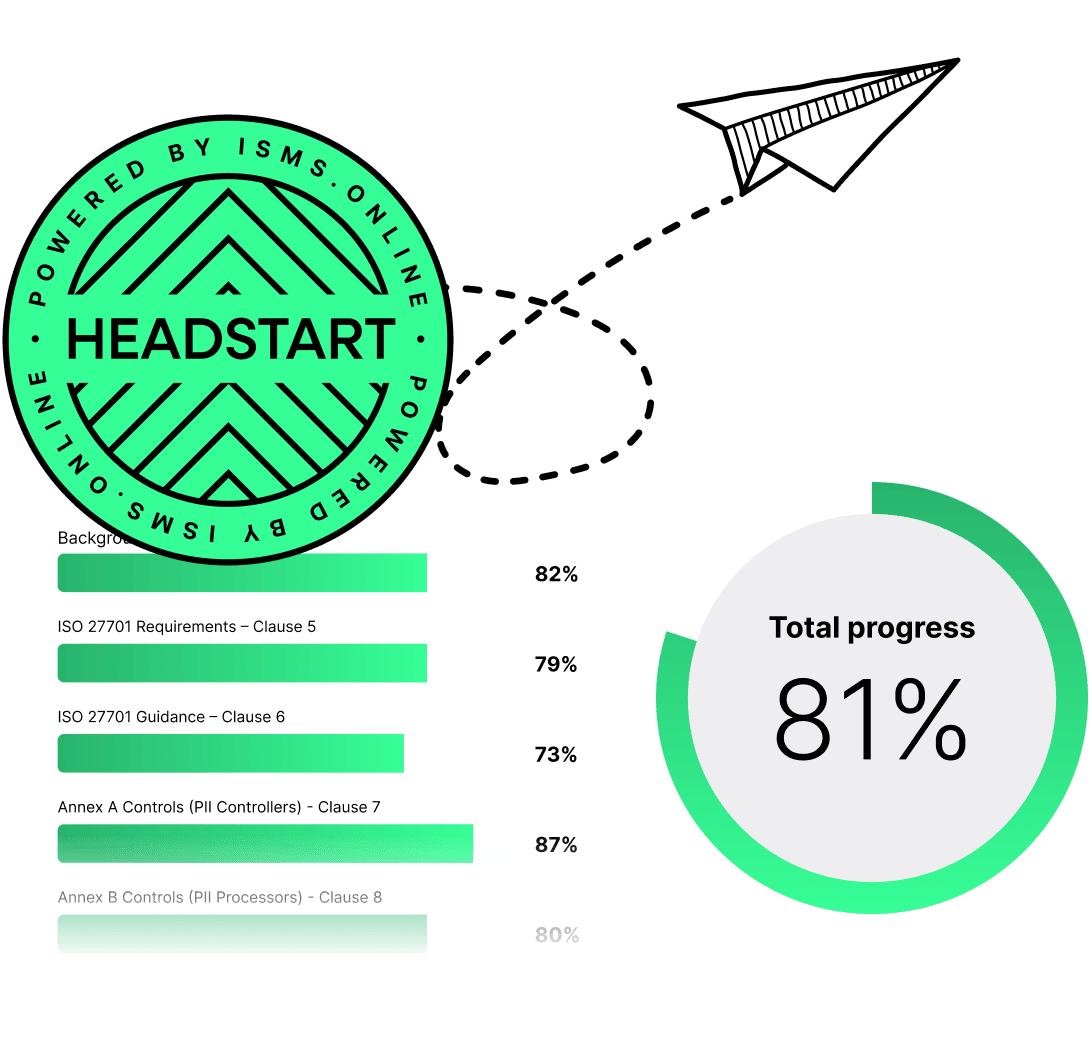
An 81% Headstart from day one
We’ve done the hard work for you, giving you an 81% Headstart from the moment you log on. All you have to do is fill in the blanks.
Why Should You Comply With Annex A.5.19? Key Aspects and Common Challenges
1. Supplier Assessment:
Risk Assessment:
Challenge: Obtaining accurate and comprehensive information about the supplier’s security posture and history of security incidents.
Solution: Conduct thorough due diligence using standardised assessment templates and document findings in the Risk Bank. Utilise the Dynamic Risk Map to visualise and manage risks.
Compliance Checklist:
Associated ISO Clauses: Identifying and assessing risks (Clause 6.1.2), Documenting and maintaining information (Clause 7.5).
Due Diligence:
Challenge: Verifying supplier compliance with security standards and regulations can be time-consuming and complex.
Solution: Leverage assessment templates and compliance management features to streamline the due diligence process and ensure thorough evaluation.
Compliance Checklist:
Associated ISO Clauses: Conducting internal audits (Clause 9.2), Ensuring competence and awareness (Clause 7.2).
2. Security Requirements:
Contractual Agreements:
Challenge: Ensuring that security requirements are clearly defined and legally binding in contracts and SLAs.
Solution: Use policy templates to create robust security clauses and incorporate them into supplier agreements. Utilise version control to maintain up-to-date documents.
Compliance Checklist:
Associated ISO Clauses: Establishing and maintaining documented information (Clause 7.5), Determining and providing necessary resources (Clause 7.1).
Security Policies:
Challenge: Aligning supplier security policies with the organisation’s security objectives and ensuring adherence.
Solution: Regularly review and update supplier policies using policy management tools. Ensure clear communication of these policies to suppliers through collaboration tools.
Compliance Checklist:
Associated ISO Clauses: Establishing security policies (Clause 5.2), Communicating relevant policies to interested parties (Clause 7.4).
3. Ongoing Management:
Monitoring and Review:
Challenge: Continuously monitoring supplier compliance and performance can be resource-intensive.
Solution: Implement performance tracking and monitoring features to automate and streamline the review process. Schedule regular assessments and audits.
Compliance Checklist:
Associated ISO Clauses: Monitoring and measuring performance (Clause 9.1), Conducting management reviews (Clause 9.3).
Incident Management:
Challenge: Coordinating incident response between the organisation and suppliers, especially in a timely manner.
Solution: Use the Incident Tracker and workflow automation to ensure efficient incident reporting, response coordination, and resolution.
Compliance Checklist:
Associated ISO Clauses: Managing and reporting incidents (Clause 6.1.3), Continual improvement through corrective actions (Clause 10.1).
4. Supplier Termination:
Exit Strategies:
Challenge: Ensuring the secure return or destruction of the organisation’s data and revoking access to information systems upon termination of the supplier relationship.
Solution: Develop clear exit strategies and protocols using document management features. Track and verify the completion of all termination procedures.
Compliance Checklist:
Associated ISO Clauses: Maintaining security during changes (Clause 8.3), Ensuring secure disposal or return of assets (Clause 8.1).
5. Communication and Collaboration:
Information Sharing:
Challenge: Maintaining clear and secure communication channels with suppliers to facilitate information sharing related to security threats and vulnerabilities.
Solution: Utilise collaboration tools and alert systems to ensure timely and secure communication with suppliers.
Compliance Checklist:
Associated ISO Clauses: Ensuring effective internal and external communication (Clause 7.4), Documenting and maintaining communication records (Clause 7.5).
Training and Awareness:
Challenge: Ensuring that suppliers understand and adhere to the organisation’s security requirements and their role in maintaining security.
Solution: Provide training and awareness programmes through training modules. Track participation and comprehension to ensure effectiveness.
Compliance Checklist:
Associated ISO Clauses: Ensuring awareness and training (Clause 7.2), Communicating roles and responsibilities (Clause 5.3).

Free yourself from a mountain of spreadsheets
Embed, expand and scale your compliance, without the mess. IO gives you the resilience and confidence to grow securely.
ISMS.online Features for Demonstrating Compliance with A.5.19
1. Supplier Management:
Supplier Database: Maintain a comprehensive database of all suppliers, including their contact information, risk assessments, and performance metrics.
Assessment Templates: Utilise customisable templates for assessing supplier security posture, conducting due diligence, and verifying compliance with security requirements.
Performance Tracking: Monitor supplier performance against agreed security requirements and SLAs, ensuring continuous compliance and prompt identification of any issues.
Compliance Checklist:
2. Risk Management:
Risk Bank: Use the Risk Bank to document and categorise risks associated with supplier relationships, ensuring a structured approach to risk identification and mitigation.
Dynamic Risk Map: Visualise and manage risks related to suppliers, facilitating ongoing risk assessment and treatment planning.
Risk Monitoring: Continuously monitor risks associated with suppliers and update risk profiles based on changes in their security posture or incidents.
Compliance Checklist:
3. Policy Management:
Policy Templates: Access a library of policy templates to define and communicate security requirements for suppliers, including data protection, access control, and incident management.
Version Control: Ensure all policies related to supplier management are up-to-date and accessible, with version control and audit trails for compliance verification.
Compliance Checklist:
4. Incident Management:
Incident Tracker: Track and manage security incidents involving suppliers, ensuring timely reporting, response coordination, and resolution.
Workflow Automation: Automate incident response workflows to streamline communication and actions between the organisation and suppliers.
Reporting: Generate detailed reports on incidents involving suppliers to support continuous improvement and compliance audits.
Compliance Checklist:
5. Compliance Management:
Regs Database: Access a comprehensive database of regulatory requirements to ensure supplier contracts and agreements comply with relevant security standards.
Alert System: Receive alerts on changes in regulations or standards that may impact supplier management, ensuring proactive compliance.
Reporting and Documentation: Maintain detailed documentation of supplier assessments, risk management activities, incident responses, and compliance efforts for audit purposes.
Compliance Checklist:
Implementation Tips
- Develop a Comprehensive Supplier Management Policy: Outline the criteria for selecting, assessing, and managing suppliers, ensuring it aligns with organisational security objectives.
- Use Standardised Tools and Templates: Utilise questionnaires, assessment tools, and policy templates to streamline processes and maintain consistency.
- Integrate Security Performance Metrics: Regularly review and incorporate security performance metrics into supplier evaluations to measure and track compliance.
- Foster Collaborative Relationships: Promote a culture of security collaboration and continuous improvement with suppliers to ensure mutual understanding and adherence to security requirements.
By implementing these controls and leveraging ISMS.online features, organisations can overcome common challenges and ensure that their suppliers are effectively managing information security risks, thereby protecting the organisation’s information assets throughout the supply chain.

Manage all your compliance, all in one place
ISMS.online supports over 100 standards and regulations, giving you a single platform for all your compliance needs.
Every Annex A Control Checklist Table
| ISO 27001 Control Number | ISO 27001 Control Checklist |
|---|---|
| Annex A.6.1 | Screening Checklist |
| Annex A.6.2 | Terms and Conditions of Employment Checklist |
| Annex A.6.3 | Information Security Awareness, Education and Training Checklist |
| Annex A.6.4 | Disciplinary Process Checklist |
| Annex A.6.5 | Responsibilities After Termination or Change of Employment Checklist |
| Annex A.6.6 | Confidentiality or Non-Disclosure Agreements Checklist |
| Annex A.6.7 | Remote Working Checklist |
| Annex A.6.8 | Information Security Event Reporting Checklist |
| ISO 27001 Control Number | ISO 27001 Control Checklist |
|---|---|
| Annex A.7.1 | Physical Security Perimeters Checklist |
| Annex A.7.2 | Physical Entry Checklist |
| Annex A.7.3 | Securing Offices, Rooms, and Facilities Checklist |
| Annex A.7.4 | Physical Security Monitoring Checklist |
| Annex A.7.5 | Protecting Against Physical and Environmental Threats Checklist |
| Annex A.7.6 | Working in Secure Areas Checklist |
| Annex A.7.7 | Clear Desk and Clear Screen Checklist |
| Annex A.7.8 | Equipment Siting and Protection Checklist |
| Annex A.7.9 | Security of Assets Off-Premises Checklist |
| Annex A.7.10 | Storage Media Checklist |
| Annex A.7.11 | Supporting Utilities Checklist |
| Annex A.7.12 | Cabling Security Checklist |
| Annex A.7.13 | Equipment Maintenance Checklist |
| Annex A.7.14 | Secure Disposal or Re-Use of Equipment Checklist |
How ISMS.online Help With A.5.19
Ensuring robust information security in supplier relationships is critical to protecting your organisation’s sensitive data and maintaining compliance with ISO 27001:2022. By leveraging the comprehensive features of ISMS.online, you can streamline the implementation of Annex A 5.19 controls, overcome common challenges, and achieve seamless compliance.
Ready to enhance your supplier management and fortify your information security framework? Contact ISMS.online today to learn how our platform can support your compliance journey and book a personalised demo.
Take the next step towards stronger security and compliance.







