





































What Forces Shape the NHS Data Security and Protection Toolkit?
The NHS Data Security and Protection Toolkit stands as the UK’s definitive reference for assessing and ensuring healthcare data integrity. Its structure results from an evolutionary redesign: the toolkit replaced the IG Toolkit in April 2018, aligning all NHS suppliers and partners—even small tech vendors—with a singular framework tethered to the National Data Guardian’s 10 data security standards, GDPR, and NIS safeguards.
From Fragmentation to Unified Accountability
Change was required. Fragmented, ad-hoc compliance practices that previously plagued the sector bred gaps, silos, and audit anxiety—auditors saw “patchwork;” suppliers felt perpetual catch-up. By integrating the toolkit into every governance and risk workflow, NHS Digital elevated the minimum bar for both technical controls and leadership attestation.
- NDG’s 10 standards and annual DSP self-assessment are now non-negotiable.
- GDPR compliance underpins every control, with clear mapping into audit templates.
- NIS regulation ensures infrastructure resilience, echoing ISO 27001’s global benchmarks.
Visible Trust Signals—Not Paperwork
Endorsements mean little if not operationalized. What distinguishes organisations succeeding with the DSP Toolkit is adoption of real-time compliance dashboards, role-based tasking, and evidence audits where nothing goes unverified or untracked. Annual “box-ticking” is obsolete: auditors expect continuous visibility, not lagging snapshots.
Risk appetite is a myth. NHS data stewardship demands proof.
Core Regulatory Standards Embedded in the DSP Toolkit
| Standard | Core Requirement | Compliance Mechanism | NHS Application Example |
|---|---|---|---|
| NDG 10 | Leadership, technical controls | Annual DSP self-assessment | Organisational controls attested |
| GDPR | Data privacy, breach protocols | Evidence, incident response | SAR response time monitoring |
| NIS | Infrastructure resilience | Business continuity mapping | Network segmentation, downtime logs |
| ISO 27001 | Risk management, documentation | Control mapping, audits | Unified risk register, SoA reporting |
Why Definition Drives Confidence
Understanding the toolkit’s evolution grounds your team and board in the logic of today’s NHS compliance landscape. Gap analysis is no longer theoretical—your readiness can be traced, proven, and attested. The organisations that operationalize these standards not only pass audits but become partners of influence within the NHS ecosystem. Your next accreditation step is as much about narrative as about control mapping.
Book a demoWhy Is Data Security an Operational Imperative in Healthcare?
Technical compliance is only the starting point; high-stakes healthcare security means defending reputation, service uptime, and patient trust with visible, ongoing assurance.
Data Exposure Is a Direct Threat to Organisational Status
Every known breach—misaddressed email, lost device, credential compromise—turns a compliance lapse into front-page news. Regulatory penalties range from significant ICO fines to contract suspension or public blacklisting. Yet the numbers tell only half the storey: post-incident supplier churn rates and reputation scores permanently dent those who treat security as “just another process.”
- Recent NHS Digital analyses: over 80% of data breaches stem from human factors, not zero-days.
- ICO enforcement underscores that “didn’t know” equals “didn’t care” to the regulator.
Resilience Requires Demonstrable, Continuous Controls
CISOs, compliance leads, and board sponsors are expected to deliver more than a static policy assertion—they must show audit logs, live user access footprints, and continuous testing results. Our platform provides an integrated view, so leadership can preemptively spot, investigate, and resolve issues before they escalate.
It’s not the hackers who close your doors. It’s the next audit that finds what your risk log missed.
Risks and Solutions Summary Table
| Threat/Vulnerability | Actionable Solution | Audit-Ready Evidence Available? |
|---|---|---|
| Untrained staff | Automated training modules, logs | Yes (via dashboard) |
| Weak MFA / password reuse | Technical control enforcement, periodic review | Yes (timestamped) |
| Untracked policy updates | Version control, approval workflow | Yes (audit trail) |
Status is Won, Not Claimed
Boards ask: how is our organisation — your department — different? Demonstrated, continual control.
Compliance is resilience. It’s how you outlast competitors, win tenders, and earn patient trust every day.
ISO 27001 made easy
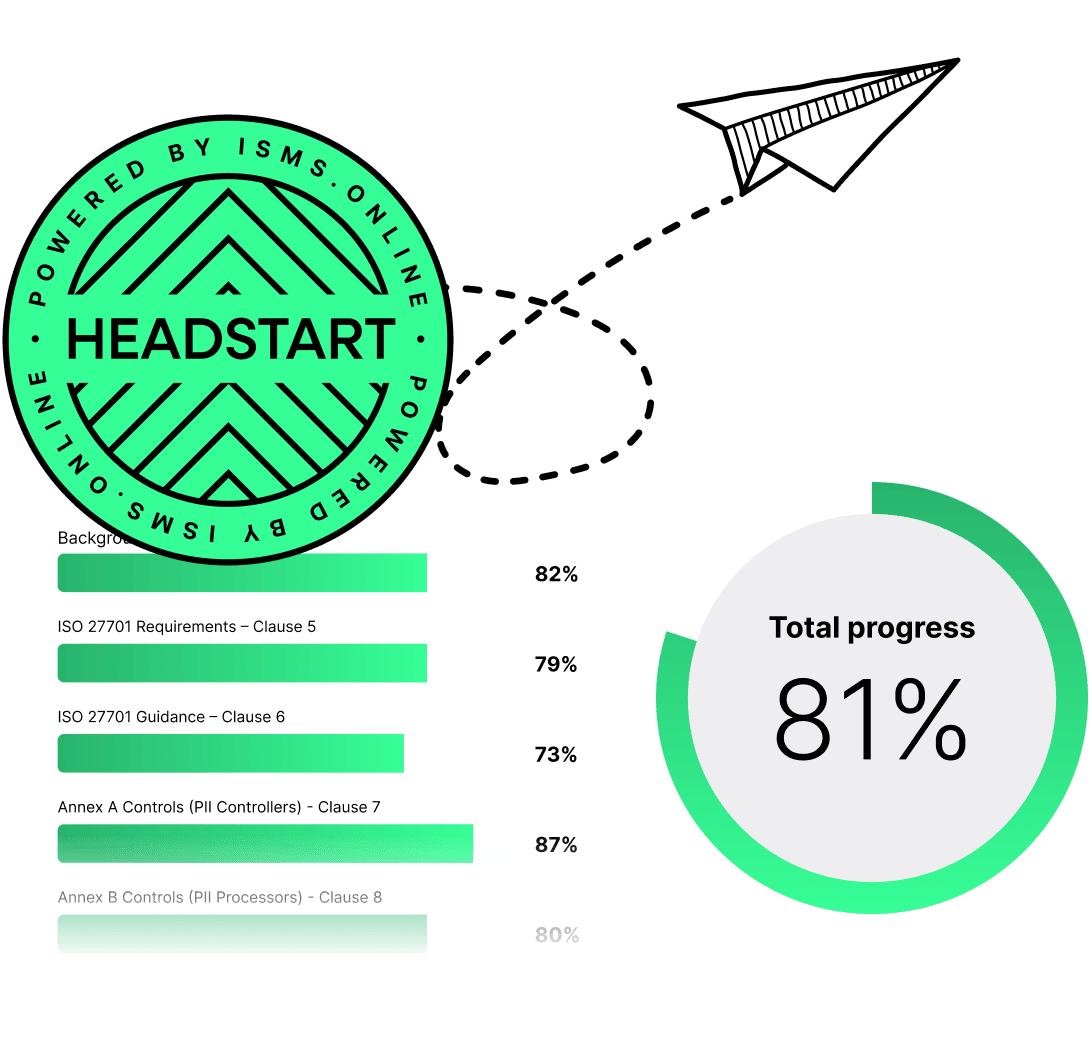
An 81% Headstart from day one
We’ve done the hard work for you, giving you an 81% Headstart from the moment you log on. All you have to do is fill in the blanks.
How Does the Toolkit Integrate NHS, GDPR, and ISO 27001 Mandates?
The DSP Toolkit is not a checkbox exercise but an integrated compliance engine: it connects disparate frameworks — NHS Digital, GDPR, and ISO 27001 — into a unified operational cadence.
Mapping Controls for Immediate Cross-Framework Gains
Legacy toolkits forced manual cross-mapping; today, organisations expect (and auditors demand) consolidated controls and shared evidence logs. No more duplicating evidence for different audits. One control state applies to multiple standards at once, and your documentation flows from common sources.
- Data minimization policies map to both GDPR legality and DSP Standard 3.
- Risk registers satisfy both ISO’s Clause 6 and NIS’s incident reporting criteria.
- Unified asset inventories support technical, operational, and business reporting.
Streamlined Mapping Across Frameworks
| Compliance Domain | NHS DSP Control | ISO 27001 Clause | GDPR Article | NIS Element |
|---|---|---|---|---|
| Risk Assessment | Standard 4, 8 | Clause 6, 8 | Article 32 | Security Controls |
| Data Breach Mgmt | Standard 6, 7 | Clause 16 | Article 33 | Incident Response |
| Access Control | Standard 9 | Clause 9, 10 | Article 25 | Access Management |
Efficiency and Audit-Readiness as Competitive Weapons
Unified compliance isn’t an abstraction. Organisations moving to an integrated platform experience both time savings and a sharp reduction in last-minute audit stress. Consistency across your compliance, cybersecurity, and risk functions delivers leadership confidence, reduces legal exposure, and positions your organisation as a preferred NHS partner.
You don’t need more evidence. You need less duplication with stronger proof.
When Does Scheduled Self-Assessment Become Ongoing Readiness?
Annual audits used to be the compliance rhythm. Today, NHS suppliers who schedule ongoing DSP Toolkit self-assessments build audit immunity—and set a new cultural norm.
Escaping the “Deadline Mindset” Trap
When you see compliance as a fixed event, you set your organisation up for firefighting, rushed controls, and recurring surprises. Instead, integrate self-assessment into your operational review—quarterly or after significant changes. Every process improvement, staff onboarding, or technical upgrade should trigger a review. This rhythm builds readiness and equates to fewer audit findings and smoother remediation cycles.
Compliance Review Cadence
| Trigger Event | Review Timing | Evidence Required |
|---|---|---|
| Annual / External audit | Annually | Full control mapping |
| Staff turnover | Within 30 days | Role access review |
| System change/upgrade | Immediately post-change | Updated risk assessment |
| Policy revision/incident | At next team sync | Change log, approval record |
Leadership Sets the Compliance Clock
When your peers and team see assessment as an always-on, intrinsic part of operational improvement—not just a compliance checklist—the result is cultural transformation: from defensive to proactive, from regulator-dictated to board-driven.
Most audit failures happen in the gaps between events, not at the deadline. Set your own tempo.

Free yourself from a mountain of spreadsheets
Embed, expand and scale your compliance, without the mess. IO gives you the resilience and confidence to grow securely.
How Does Automation Convert Complexity Into Opportunity?
Securing compliance across NHS mandates, GDPR, and ISO would be overwhelming if it wasn’t for workflow automation. Relying on manual updates, scattered task reminders, or staff memory is a guarantee for missed controls and findings. Our platform’s automation isn’t a plug-in—it’s the connective tissue that keeps compliance structures coherent, accountable, and transparent.
Real-Time Tasking and Predictive Escalation
Automated assignments don’t just track workflows—they surface overdue issues, escalate risks to accountable owners, and close the loop with live dashboards. Instead of chasing up email trails or “who owns what,” every action and outcome is visible, timestamped, and always ready for board or audit display.
- Pre-written policies incorporated with one click
- Template-driven evidence modules mapped to each standard
- Task tracking assigns, reminds, and provides instant status
Automation Outcomes for NHS Compliance
| Process | Manual Method | Automated Method | Result |
|---|---|---|---|
| Policy rollout | Send by email, confirm manually | Assign via platform, require trackable read | 100% accountability |
| Risk review | Spreadsheet checklist | Triggered review, risk log update | No missed steps |
| Audit prep | Collect docs ad hoc | One-click evidence export | Weeks to hours |
Operational Clarity for Results-Focused Leaders
CISOs and compliance officers move from asking “Are we covered?” to asserting “Here’s our current posture, logged and ready.” Automation not only fuels reporting accuracy but ensures that your audit posture always matches operational reality.
When audit panic disappears, leaders invest confidence, not doubt.
What Barriers Block Effective DSP Toolkit Implementation?
No organisation is immune to legacy drag—integrating DSP Toolkit mandates with existing infrastructure exposes where process, culture, or technology haven’t kept up.
Identifying and Neutralising Common Obstacles
Barriers often show up as missing documentation, unreviewed control tasks, or inconsistent evidence logs. These aren’t just regulatory missteps—they’re cues for operational risk. System integration fails where migration is left for “later,” and when different teams don’t align data formats or workflows.
- Pitfalls you can preempt:
- Legacy records without digital trace
- Misaligned policies across business units
- Staff unclear on their compliance roles
From Pain to Solution — Neutralising Inertia
The strategy that wins is unapologetically direct: migrate early, converge processes, and enforce automation from day one. Value is realised when every team, from IT to compliance, becomes fluent in a common ISMS language—the backbone to establish audit-ready status anytime.
- Solution Stack: Role-based views, data migration support, cross-team triggers
- Operational Proof: Organisations that consolidate operations within a unified platform report audit finding remediations 50% faster.
Inertia is the enemy. The winning teams don’t wait for perfect—they create real-time visibility before the next audit faceoff.

Manage all your compliance, all in one place
ISMS.online supports over 100 standards and regulations, giving you a single platform for all your compliance needs.
Where Does Unified Compliance Turbocharge Audit-Readiness and Risk Control?
Centralization isn’t just about having fewer silos—it’s the mechanism for transforming audit and risk management from “required” to “advantageous.” Every board expects live, clear reporting, not end-of-year fire drills.
Audit-Ready, Always—and Leading With It
A single platform equips your leadership, risk, and compliance managers with the ability to surface any policy, evidence, or risk log at a moment’s notice. No more “missing attachments” or “check SharePoint.” Our system logs every change, maps it to a control, and retains evidence for instant export.
- On-platform, role-based workflows cut incident remediation time by 33% for audit findings.
- Transparency and accountability—mutual confidence among compliance, IT, and the board.
Board-Ready Benefits of Unified Compliance
| Leadership Concern | Unified Compliance Solution | Result |
|---|---|---|
| Slow audit cycles | Instant evidence mapping for auditors | Faster certification |
| Board risk visibility | Live dashboard with real-time risk status | Better-informed decisionmaking |
| Accountability gaps | Task-based role tracking | Zero “lost” actions |
Credibility as Outcome, Not Attribute
Your status among NHS suppliers, partners, and patients isn’t what you claim—it’s what you can show, now. The highest value is earned by those who are always ready, not scrambling. Stand out by being the team who never has to explain a preventable gap.
How Do You Convert Urgency to Enduring Leadership in NHS Data Security?
Market leaders in NHS data protection are neither passive nor purely reactive. They embed compliance into their daily operations, using unified systems and visible leadership standards as their badge—not their fallback.
Compliance as Strategic Identity
Proactive organisations are recognised in the NHS ecosystem by their audit confidence, not their marketing. When questions arise, your leadership can speak to every control with data-backed evidence—earning respect from peers, buyers, and auditors.
Leadership in NHS data security isn’t declared—it’s logged, shown, and simply unquestioned.
Take Your Team Where Only Leaders Go
If you envision your organisation as one that never waits for the next mandate, offence, or audit request but leads the way, you’ve already set yourself apart. Now is the time to prove it—adopt the compliance platform built for both current demands and future standard shifts.
- Elevate your audit posture, protect patient trust, and secure your brand’s NHS status.
- Don’t just comply; define what being “ready” means in NHS data stewardship.
Frequently Asked Questions
What regulatory forces and standards define the NHS DSP Toolkit’s compliance landscape?
You navigate a compliance framework designed for relentless accountability. The NHS Data Security and Protection Toolkit stands on three pillars: the NDG’s 10 Data Security Standards, GDPR, and NIS Regulations—all harmonised to turn every supplier and care provider into a verifiable guardian of sensitive information.
How are these standards mapped to your daily operations?
- The NDG’s 10 principles require continual control over access, data handling, leadership ownership, and incident response.
- GDPR brings explicit documentation of where and how patient records move, as well as processes for requests, consent, and breach alerts.
- NIS overlays infrastructure resilience, meaning your network and recovery protocols must stand up to both digital and physical threats.
Transitioning from the old IG Toolkit to the DSP Toolkit wasn’t a cosmetic change—it was a shift from sporadic audits to continual, evidence-backed assurance. Each audit trail, policy update, and risk register entry should translate directly into traceable protection for patient data and organisational reputation. Any disjoint between frameworks hints at exposure, not compliance.
Why does this matter for rapid audit defence?
Modern ISMS solutions—notably those aligned with Annex L—allow you to map controls, evidence, and reviews across the full regulatory matrix. That transition eliminates the anxiety of duplicated work and gets your board to operational confidence faster. Organisations excelling under this system track their time from audit request to evidence submission in days—not weeks. Each data point becomes a shield, not just a formality.
Why is strong data security no longer optional for NHS suppliers?
Your organisation’s survival is inseparable from continuous, visible data safeguards. One exposed record or unlogged policy change can trigger a chain of financial penalties, lost contracts, and reputational collapse. Data security isn’t about compliance for compliance’s sake—it’s protection for your right to deliver care, hold contracts, and command stakeholder trust.
What are the real costs when controls slip?
- Over 80% of NHS breaches in 2023 stemmed from workforce errors and overlooked updates—despite “compliance on paper.”
- ICO fines in the sector regularly break six figures; lost tenders or contracts have no second acts.
- Stakeholder trust, once lost, doesn’t return with a policy update—every day of lost reputation is a revenue drain.
You can’t outwait the next audit or incident. Boards and executive teams expect evidence, not reassurances: access logs, staff training records, incident response histories. Our approach codifies these not as checkboxes, but as operational signatures—proof of stewardship, continuously displayed in unified compliance dashboards.
How do you turn security into board-level influence?
By making everyday controls—MFA enforcement, real-time training, automated approvals—visible and auditable, you send a message: this organisation values reliability over rhetoric. The compliance officers and CISOs seen as proactive risk managers become the voices boards turn to when it’s decision time.
How does the DSP Toolkit integrate ISO 27001, GDPR, and NIS into a seamless compliance workflow?
True compliance mastery abandons the notion of separate playbooks. The DSP Toolkit operationalizes the requirements of ISO 27001, GDPR, and NIS in a single, interconnected matrix—where every policy, training, and incident log has ripple effects across all frameworks.
What changes when evidence is mapped once—and used everywhere?
- Modular control libraries mean one documented process can satisfy multiple standards.
- Centralised risk registers and incident logs unify your response and reporting, so audit cycles shrink and accuracy climbs.
- Updates in NHS guidance, regulatory shifts, or process tweaks can be reflected system-wide in real time, not after the fact.
Here, every piece of evidence—an access control list, a password update, a renewed staff policy—pulls double and triple duty. The days of managing separate folders or scrambling for last-minute audit support are gone. Well-designed ISMS platforms, like ours, provide interfaces for mapping controls directly, ensuring that every compliance officer can reach reporting certainty in minutes.
Why do unified workflows defeat audit anxiety?
Shared control mapping and central documentation not only stop the endless “see also”—they reduce human slipups and catch gaps before auditors do. It’s not about buying peace of mind; it’s about demonstrating, every day, that your organisation treats patient data as the currency of trust.
When should you schedule DSP self-assessment—and what’s the real danger in waiting?
Initiating DSP Toolkit self-assessment isn’t about timing to please auditors; it’s prevention of organisational blindspots. A quarterly rhythm or event-triggered check (like integrating new systems or onboarding staff) is the new norm for leaders defending contracts and reputation.
What risks surface when reviews trail incidents?
- Evidence buried until deadline is evidence at risk. Every missed update is a potential gap in audit defence.
- New regulations, leadership churn, or system changes demand review earlier than any “annual” cycle suggests.
- Organisations with live ISMS-driven self-checks report fewer incidents, faster audit turnarounds, and less operational disruption.
Let’s put it bluntly: waiting means letting decay accumulate. Proactive scheduling ensures your readiness is more than a claim; it’s demonstrated in every log, approval, and staff acknowledgment. Our ISMS.online reminders and auto-scheduling eliminate the possibility of “forgotten” reviews, closing the loop for compliance leads and governing boards alike.
Who gets ahead—the reactive, or the ready?
Those who build review cadence into operational DNA hold the contract, win the partnership, and lead boardroom narratives. The choice, every quarter, is simple: review now, or justify later.
How can automation transform compliance from a daily grind to an operational advantage?
Manual compliance isn’t just slow—it’s a liability. Error-prone data entry, hunting for outdated policy draughts, and piecemeal audit trails invite both inefficiency and risk. Automation in compliance management replaces chaos with coordinated action, making real-time performance the standard, not the exception.
What operations become seamless through automation?
- Pre-populated policy templates cut drafting time and enforce up-to-date standards.
- Automated workflow triggers assign and escalate tasks, so nothing falls through the cracks—and compliance leads can finally focus on strategy, not chasing down signatures.
- Evidence management becomes a living library: every incident response, access approval, or training update is instantly search-ready for audits or regulatory checks.
Nearly 70% of organisations shifting to unified, ISMS-driven automation reported faster certifications and lower operational costs over two years. Our platform’s workflow engine, evidence aggregator, and role-based dashboard eliminate busywork, let you prove compliance at every moment, and push your team up the industry learning curve fast.
What changes when your controls self-prove?
Audit panic vanishes, and your team stands out for discipline, not disorder. Automated compliance isn’t about replacing professionals—it makes leaders indispensable by amplifying their time and attention where most valuable.
Where does a unified compliance system reshape audit defence and risk management?
Board-level influence and organisational prestige rest on the discipline of “always audit-ready” operations. A centralised compliance system consolidates policy, risk, and evidence, ensuring that audit defence is as much about pacing as it is about proof.
What real gains come from unified risk and evidence management?
- A single source of truth eliminates double handling, record silos, and the scramble for last-minute audit redemption.
- Adaptive dashboards, direct export, and real-time incident tracking cut reporting cycles in half and make proof available at any review instant.
- Role-oriented access means tasks are fulfilled on schedule, with every change, escalation, or completion logged transparently.
Data-driven organisations using centralised ISMS platforms—especially those built with Audit-Ready logic—don’t just avoid incident; they invite trust from boards, partners, and regulators.
Who claims the right to lead?
The organisations whose audit signals are traceable, systems are reliably self-correcting, and risk is addressed before it grows are the ones who ultimately dominate contract wins and stakeholder trust. No one remembers a flawless audit that wasn’t delivered.
Security isn’t a claim; it’s a chain of transparent actions—a leadership storey told through evidence, momentum, and confidence measured by every system review.






