















Protecting PII: Best Practices from ISO 27002 Control 5.34
Personally Identifiable Information (PII) is any piece of information that confirms an individual’s identity.
A person’s PII can include their:
- Address
- National Insurance Number or Social Security Number
- Driver’s licence
- Financial information, including bank accounts
- Medical records
PII forms a key part of an organisation’s data governance strategy, and carries a number of unique regulatory, legislative and contractual risks.
Control 5.34 deals with PII in three distinct ways:
- Preservation
- Privacy
- Protection
Purpose of Control 5.34
Control 5.34 is a preventive control that maintains risk by creating guidelines and procedures that fulfil an organisation’s legal, statutory, regulatory and contractual requirements relating to the storage, privacy and protection of PII in all its forms.
Attributes of Control 5.34
| Control Type | Information Security Properties | Cybersecurity Concepts | Operational Capabilities | Security Domains |
|---|---|---|---|---|
| #Preventive | #Confidentiality | #Identify | #Information Protection | #Protection |
| #Integrity | #Protect | #Legal and Compliance | ||
| #Availability |
ISO 27001 made easy
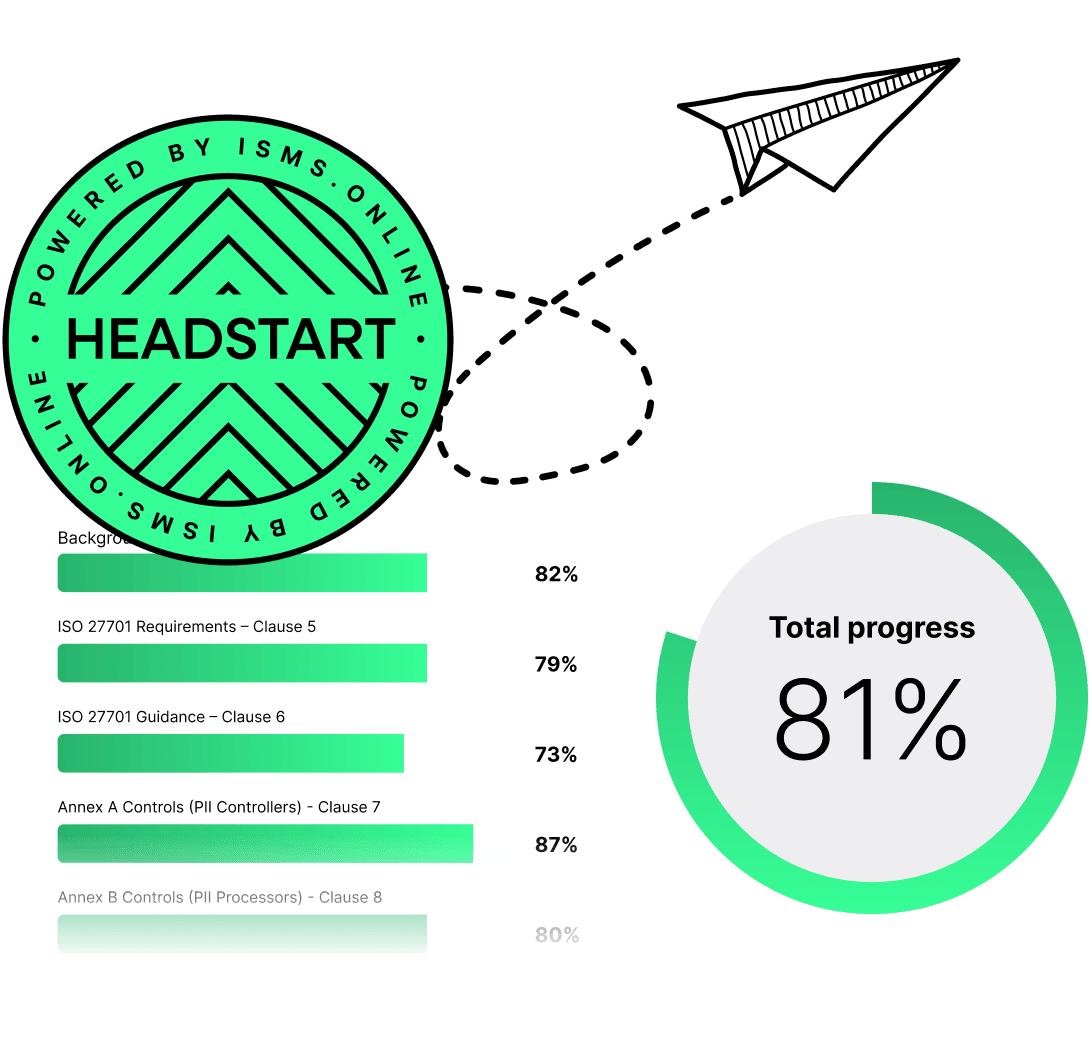
An 81% Headstart from day one
We’ve done the hard work for you, giving you an 81% Headstart from the moment you log on. All you have to do is fill in the blanks.
Ownership of Control 5.34
Control 5.34 explicitly names an organisation’s delegated Privacy Officer (or organisational equivalent) as the person who should oversee PII adherence.
General Guidance on Control 5.34
Organisations should treat PII as a topic-specific business function, and develop policies that are unique to their organisation, and the categories of PII that are most common to their day-to-day operation.
First and foremost, the organisation should draft, develop and implement a series of policies that cater to the preservation, privacy and protection of PII, and ensure these are communicated to and used by all employees that process PII – not just those who are obligated to deal with it as part of their job roles.
PII needs to be managed in a structured, clear and concise manner. To achieve this, Control 5.34 asks organisations to draft policies that consider individual roles, responsibilities and data controls throughout their organisation.
The easiest and most efficient way to achieve this is to adopt a top-down approach that features a Privacy Officer, whose job it is to provide guidance to employees and third-party organisations on the subject of PII, and offer advice to senior management on how to remain compliant with the organisation’s obligations.
Alongside regulatory, legislative and contractual guidelines, an organisation should also implement technical and operational measures that deal with the practical handling of PII as it’s stored by and flows through the business.
Supplementary Guidance
PII legislation varies from country-to-country, even within territories that contain devolved administrations or non-federal governments.
Organisations should audit their PII processing requirements and consider any cross-border implications emanating from the collection, processing or distribution of PII within separate jurisdictions.
Whilst ISO 27002:2022 doesn’t offer any additional guidance on how to achieve this, a number of ISO documents go into greater detail on the matter, including:
- ISO/IEC 29100 (protection of PII within ICT systems)
- ISO/IEC 27701 (privacy information management systems)
- ISO/IEC 27018 (PII within public cloud infrastructure)

Manage all your compliance, all in one place
ISMS.online supports over 100 standards and regulations, giving you a single platform for all your compliance needs.
Changes and Differences from ISO 27002:2013
27002:2022-5.34 replaces 27002:2013-18.1.4 (Privacy and protection of personally identifiable information).
27002:2022-5.34 is almost a carbon copy of its 2013 predecessor, with two notable exceptions.
- 27002:2022-5.34 asks organisations to consider a topic-specific policy when formulating and implementing PII policies and procedures.
- 27002:2022-5.34 places more of an emphasis on the preservation of PII (as noted in the control title), alongside standard privacy and protection guidelines.
New ISO 27002 Controls
| ISO/IEC 27002:2022 Control Identifier | ISO/IEC 27002:2013 Control Identifier | Control Name |
|---|---|---|
| 5.7 | NEW | Threat intelligence |
| 5.23 | NEW | Information security for use of cloud services |
| 5.30 | NEW | ICT readiness for business continuity |
| 7.4 | NEW | Physical security monitoring |
| 8.9 | NEW | Configuration management |
| 8.10 | NEW | Information deletion |
| 8.11 | NEW | Data masking |
| 8.12 | NEW | Data leakage prevention |
| 8.16 | NEW | Monitoring activities |
| 8.23 | NEW | Web filtering |
| 8.28 | NEW | Secure coding |
| ISO/IEC 27002:2022 Control Identifier | ISO/IEC 27002:2013 Control Identifier | Control Name |
|---|---|---|
| 6.1 | 07.1.1 | Screening |
| 6.2 | 07.1.2 | Terms and conditions of employment |
| 6.3 | 07.2.2 | Information security awareness, education and training |
| 6.4 | 07.2.3 | Disciplinary process |
| 6.5 | 07.3.1 | Responsibilities after termination or change of employment |
| 6.6 | 13.2.4 | Confidentiality or non-disclosure agreements |
| 6.7 | 06.2.2 | Remote working |
| 6.8 | 16.1.2, 16.1.3 | Information security event reporting |
| ISO/IEC 27002:2022 Control Identifier | ISO/IEC 27002:2013 Control Identifier | Control Name |
|---|---|---|
| 7.1 | 11.1.1 | Physical security perimeters |
| 7.2 | 11.1.2, 11.1.6 | Physical entry |
| 7.3 | 11.1.3 | Securing offices, rooms and facilities |
| 7.4 | NEW | Physical security monitoring |
| 7.5 | 11.1.4 | Protecting against physical and environmental threats |
| 7.6 | 11.1.5 | Working in secure areas |
| 7.7 | 11.2.9 | Clear desk and clear screen |
| 7.8 | 11.2.1 | Equipment siting and protection |
| 7.9 | 11.2.6 | Security of assets off-premises |
| 7.10 | 08.3.1, 08.3.2, 08.3.3, 11.2.5 | Storage media |
| 7.11 | 11.2.2 | Supporting utilities |
| 7.12 | 11.2.3 | Cabling security |
| 7.13 | 11.2.4 | Equipment maintenance |
| 7.14 | 11.2.7 | Secure disposal or re-use of equipment |
How ISMS.online Helps
Our cloud-based platform provides you with a robust framework of information security controls so that you can checklist your ISMS process as you go to ensure that it meets the requirements for ISO 27k. Used properly, ISMS. online can assist you in achieving certification with the bare minimum of time and resources.
Get in touch today to book a demo.