















What is Control 6.3?
ISO 27002:2022, Control 6.3. Information Security Awareness, Education, and Training covers the need for employees of an organisation to receive appropriate information security awareness, education, and training, plus regular updates of the organisation’s information security policy, especially as it applies to their job function.
Information Security Awareness, Education and Training Explained
Information security awareness, education, and training (IT security awareness) is the process of informing users about the importance of information security and encouraging them to improve their own computer security habits.
Users must be made aware of the security risks that can come from their activities and how they can protect themselves against these risks.
Information security awareness, education, and training are critical components of any organisation’s success. It is critical that all employees understand the importance of information security and how it impacts everyone.
The more employees understand how to protect themselves from cyber threats, the more secure your organisation will be.
Attributes Table of Control 6.3
Controls can be grouped using attributes. When you look at the control’s attributes, you can more easily relate it to established industry requirements and terminology. The following attributes are in control 6.3.
| Control Type | Information Security Properties | Cybersecurity Concepts | Operational Capabilities | Security Domains |
|---|---|---|---|---|
| #Preventive | #Confidentiality | #Protect | #Human Resource Security | #Governance and Ecosystem |
| #Integrity | ||||
| #Availability |
ISO 27001 made easy
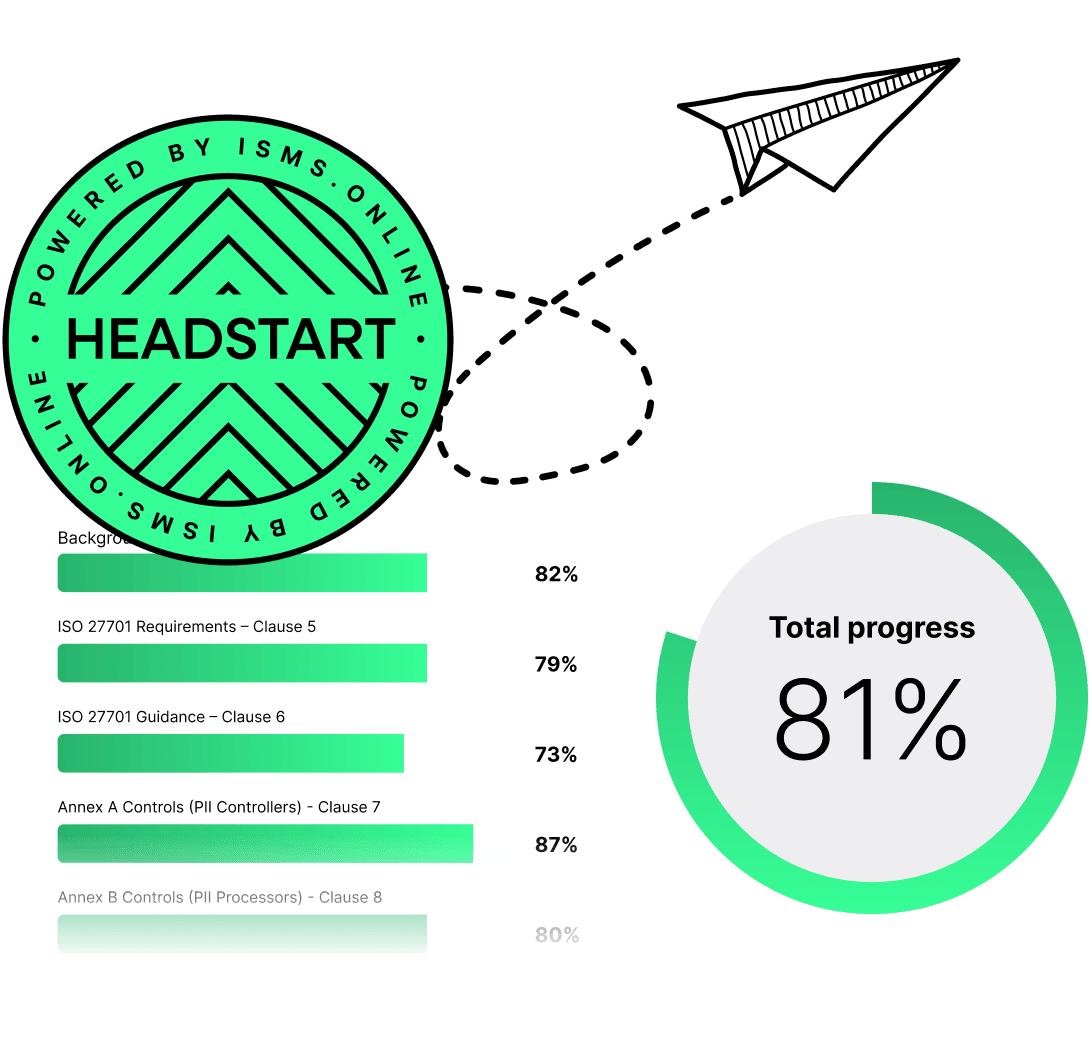
An 81% Headstart from day one
We’ve done the hard work for you, giving you an 81% Headstart from the moment you log on. All you have to do is fill in the blanks.
What Is the Purpose of Control 6.3?
The purpose of Control 6.3 is to ensure that personnel and relevant interested parties are aware of and properly trained to fulfil their information security responsibilities.
Control 6.3 covers a range of activities that help ensure that people have the knowledge and skills required to operate within an organisation’s information security framework. The main focus of this control is on awareness-raising activities about the importance of information security, encouraging good practice, and promoting compliance with relevant policies and procedures.
Control 6.3 Explained
Information security awareness, education, and training are a critical component of an organisation’s overall risk management strategy and should be considered as an integral part of the organisation’s security policy.
Control 6.3 defines the need for organisations to have an information security awareness programme that provides all employees with the necessary knowledge and skills to protect information assets. It provides guidance on what should be included in an effective awareness programme.
For example, the organisation may need to put in place security awareness training at least annually, or as required by the risk assessment, for all employees and contractors who have been assigned roles in which they have access to sensitive information assets or other types of information systems that store, process, or transmit sensitive data.
What Is Involved and How to Meet the Requirements
The requirement for control 6.3 is that an organisation should have a process to ensure that employees are adequately trained on how to perform their job duties safely and securely in a manner that does not compromise information security. This can be achieved through training sessions. It can also be achieved using online resources such as videos or webinars.
The information security awareness, education, and training programmes should be developed in accordance with the organisation’s information security policy, topic-specific policies, and pertinent information security procedures. It should also take into account the organisation’s information to be protected and the information security controls implemented to protect it. This should happen periodically.
Introductory awareness, education, and training can apply to new employees as well as those who transition to new positions or tasks that require significantly different levels of information security.
The awareness campaign should incorporate a variety of activities to raise awareness. This includes campaigns, booklets, posters, newsletters, websites, information sessions, briefings, e-learning modules, and e-mails.
According to control 6.3, this programme should cover:
- Management’s commitment to information security throughout the organisation;
- Familiarity with and compliance with applicable information security rules and obligations, including information security policy and topic-specific policies, standards, laws, statutes, regulations, contracts, and agreements;
- Personal accountability for one’s own actions and inaction, general responsibilities towards securing or protecting information belonging to the organisation and interested parties;
- Basic information security procedures [e.g. information security event reporting (6.8)] as well as baseline controls [for example, password security];
- Additional contact points and resources for additional information and advice on information security matters, including further information security awareness materials.

Free yourself from a mountain of spreadsheets
Embed, expand and scale your compliance, without the mess. IO gives you the resilience and confidence to grow securely.
Changes and Differences from ISO 27002:2013
ISO 27002:2022 is not a completely new control. This version of ISO 27002, which was published in February 2022, is an update to the previous version, which was published in 2013. As a result, control 6.3 in ISO 27002:2022 is not a brand new control. It is a slightly modified version of control 7.2.2 in ISO 27002:2013.
Control 7.2.2 in ISO 27002:2013 does not have an attributes table or a statement of purpose, which are included in control 6.3 of the ISO 27002:2022 version.
Having said that, other than the change in control number, there is no other discernible difference between the two controls. Despite the fact that the phraseology of the two controls differs, the substance and context of the two controls are essentially the same.
The language in control 6.3 was made to be more user friendly, so that people who will use the standard will be better able to relate to its content.
Who Is in Charge of This Process?
The answer to this question depends on your organisation. In many organisations, the information security awareness, education, and training programmes are managed by the security team. In other organisations, it’s handled by the HR department or another function.
The important thing is to make sure that someone is responsible for creating and implementing your organisation’s security awareness programme. This individual or department should also be supervised by the information security manager (if a different person is in charge of this role).
This person should have a good understanding of information security and be able to communicate with employees about various topics related to security best practices. This person should also be able to develop content for your training programmes and hold regular training sessions for employees.
It’s important to understand that information security is not just the responsibility of IT. It’s everyone’s responsibility. Organisations need to have a team of people responsible for security, but they also need to make sure that everyone understands the importance of confidentiality and integrity.

Manage all your compliance, all in one place
ISMS.online supports over 100 standards and regulations, giving you a single platform for all your compliance needs.
What Do These Changes Mean for You?
You don’t need to do much because ISO 27002: 2022 is not a new standard but a revision of the 2013 version. It is therefore expected that most organisations will not need to make changes.
However, if you have already implemented the 2013 version of ISO 27002, you will need to evaluate whether these changes are relevant for your organisation. You will also need to review your security processes if you are planning for ISMS certification. This will ensure that your processes are compliant with the reviewed standard.
Our ISO 27002:2022 guide, available for free download on our website, has further information on how the new ISO 27002 may affect your information security operations and ISO 27001 certification.
New ISO 27002 Controls
| ISO/IEC 27002:2022 Control Identifier | ISO/IEC 27002:2013 Control Identifier | Control Name |
|---|---|---|
| 5.7 | NEW | Threat intelligence |
| 5.23 | NEW | Information security for use of cloud services |
| 5.30 | NEW | ICT readiness for business continuity |
| 7.4 | NEW | Physical security monitoring |
| 8.9 | NEW | Configuration management |
| 8.10 | NEW | Information deletion |
| 8.11 | NEW | Data masking |
| 8.12 | NEW | Data leakage prevention |
| 8.16 | NEW | Monitoring activities |
| 8.23 | NEW | Web filtering |
| 8.28 | NEW | Secure coding |
| ISO/IEC 27002:2022 Control Identifier | ISO/IEC 27002:2013 Control Identifier | Control Name |
|---|---|---|
| 6.1 | 07.1.1 | Screening |
| 6.2 | 07.1.2 | Terms and conditions of employment |
| 6.3 | 07.2.2 | Information security awareness, education and training |
| 6.4 | 07.2.3 | Disciplinary process |
| 6.5 | 07.3.1 | Responsibilities after termination or change of employment |
| 6.6 | 13.2.4 | Confidentiality or non-disclosure agreements |
| 6.7 | 06.2.2 | Remote working |
| 6.8 | 16.1.2, 16.1.3 | Information security event reporting |
| ISO/IEC 27002:2022 Control Identifier | ISO/IEC 27002:2013 Control Identifier | Control Name |
|---|---|---|
| 7.1 | 11.1.1 | Physical security perimeters |
| 7.2 | 11.1.2, 11.1.6 | Physical entry |
| 7.3 | 11.1.3 | Securing offices, rooms and facilities |
| 7.4 | NEW | Physical security monitoring |
| 7.5 | 11.1.4 | Protecting against physical and environmental threats |
| 7.6 | 11.1.5 | Working in secure areas |
| 7.7 | 11.2.9 | Clear desk and clear screen |
| 7.8 | 11.2.1 | Equipment siting and protection |
| 7.9 | 11.2.6 | Security of assets off-premises |
| 7.10 | 08.3.1, 08.3.2, 08.3.3, 11.2.5 | Storage media |
| 7.11 | 11.2.2 | Supporting utilities |
| 7.12 | 11.2.3 | Cabling security |
| 7.13 | 11.2.4 | Equipment maintenance |
| 7.14 | 11.2.7 | Secure disposal or re-use of equipment |
How ISMS.Online Helps
ISMS.Online is a complete solution for ISO 27002 implementation. It is a web-based system that allows you to show that your information security management system (ISMS) is compliant with the approved standards using well-thought-out processes, procedures, and checklists.
It is not just an easy-to-use platform for managing your ISO 27002 implementation, but also an excellent tool for training your staff on information security best practices and processes, as well as documenting all of your efforts.
The Advantages of Using ISMS.Online:
- Easy-to-use online platform that can be accessed from any device.
- It is completely customisable to meet your needs.
- Customisable workflows and processes to fit your business needs.
- Training tools to help new hires get up to speed faster.
- A library of templates for documents such as policies, procedures, plans, and checklists.
ISMS.Online simplifies the process of implementing ISO 27002 by providing all the necessary resources, information, and tools in one place. It allows you to check that your ISMS meets the standard with just a few clicks of your mouse, which would otherwise take a long time if done manually.
Want to see it in action?
Get in touch today to book a demo.