















Purpose of Control 5.22
Control 5.22 stipulates the methods organisations should take when monitoring, reviewing and managing changes in a supplier’s information security practices and service delivery standards, and assessing the impact upon the organisation’s own levels of information security.
When managing the relationship with their suppliers, an organisation should seek to maintain a baseline level of information security that adheres to any agreements that have been entered into.
5.22 is a preventative control that modifies risk by maintaining an “agreed level of information security and service delivery” on the part of the supplier.
Attributes of Control 5.22
| Control Type | Information Security Properties | Cybersecurity Concepts | Operational Capabilities | Security Domains |
|---|---|---|---|---|
| #Preventive | #Confidentiality | #Identify | #Supplier Relationships Security | #Governance and Ecosystem |
| #Integrity | #Protection | |||
| #Availability | #Defence | |||
| #Information Security Assurance |
Ownership of Control 5.22
Ownership of Control 5.22 should rest with a member of senior management that oversees an organisation’s commercial operation, and maintains a direct relationship with an organisation’s suppliers, such as a Chief Operating Officer.
ISO 27001 made easy
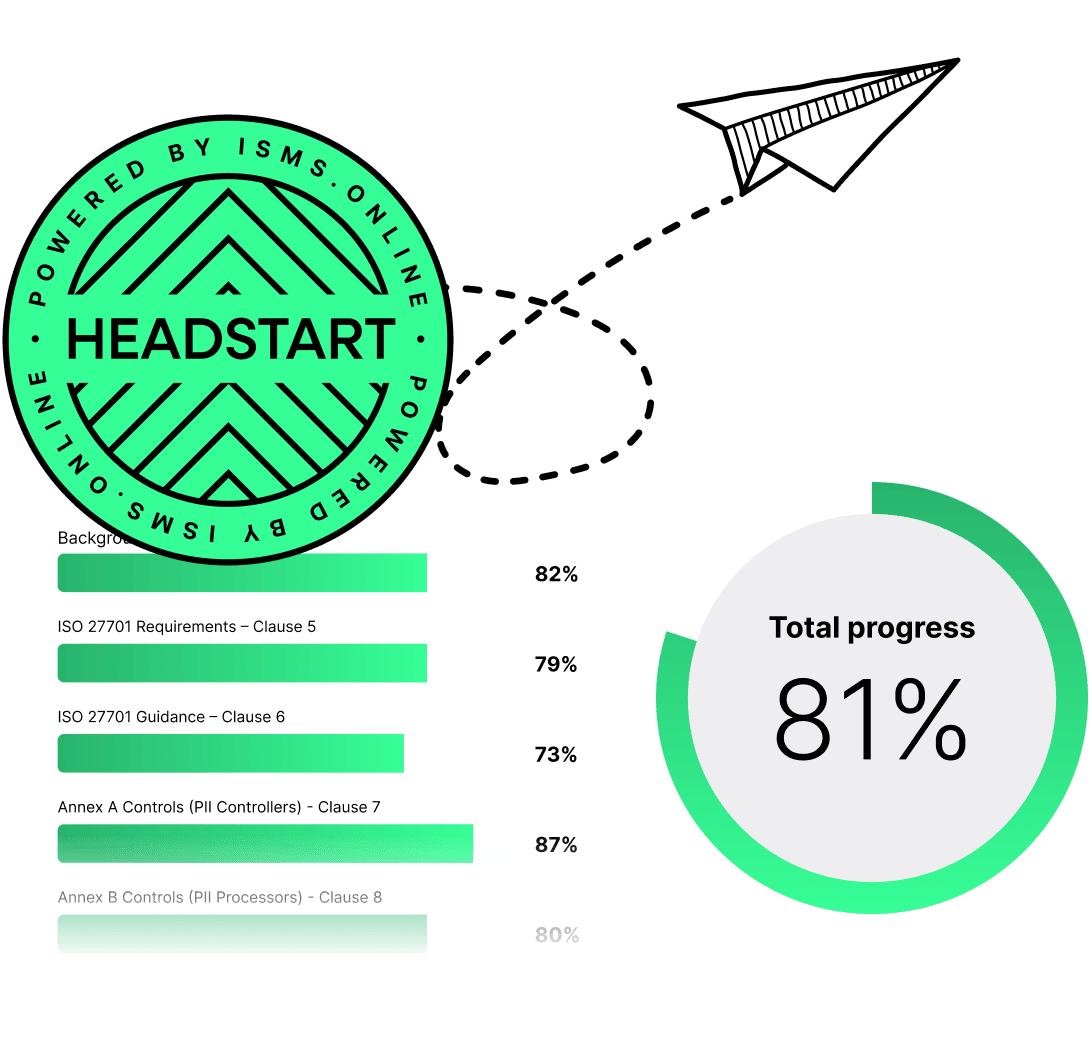
An 81% Headstart from day one
We’ve done the hard work for you, giving you an 81% Headstart from the moment you log on. All you have to do is fill in the blanks.
General Guidance on Control 5.22
Control 5.22 contains 13 main areas that organisations need to consider when managing supplier relationships, and the effect they have on their own information security standards.
Organisations need to take steps to ensure that employees who are responsible for managing SLAs and supplier relationships have the requisite levels of skill and technical resources to be able to adequately assess supplier performance, and information security standards are not being breached.
Organisations should draft policies and procedures which:
- Constantly monitor service levels in accordance with published SLAs, and any shortfalls are addressed.
- Monitor any changes made by the supplier to their own operation, including (but not limited to):
a) Service enhancements
b) The introduction of new applications, systems or software processes
c) Relevant and meaningful revisions to the suppliers internal governance documents
d) Any incident management procedural changes, or efforts intended to increase levels of information security - Monitor any service-specific changes, including (but not limited to):
a) Infrastructure amendments
b) The application of emerging technologies
c) The roll-out of product updates or version upgrades
d) Changes in the development environment
e) Logistical and physical changes to supplier facilities, including new locations
f) Any changes to outsourcing partners or subcontractors
g) The intention to subcontract, where the practice wasn’t previously in place - Ask for regular service reports, analyse data and attend review meetings in accordance with agreed levels of service delivery.
- Audit outsourcing partners and subcontractors and pursue any areas for concern.
- Review security incidents in accordance with agreed Incident Management standards and practices, and the supplier agreement.
- Maintain a thorough record of information security events, tangible operational problems, fault logs and general barriers to the service delivery standards that have been agreed.
- Proactively respond to and take remedial action towards information security-related events.
- Highlight any information security vulnerabilities and mitigate them to the fullest extent.
- Analyse any relevant information security factors inherent within the suppliers relationship with its own suppliers and subcontractors.
- Ensure that service delivery is delivered to acceptable levels following significant supplier-side disruption, including disaster recovery.
- Outline key personnel in the supplier’s operation who are responsible for maintaining compliance and adhering to the terms of an agreement.
- Regularly audit a supplier’s ability to maintain a baseline information security standard.
Supporting Controls
- 5.29
- 5.30
- 5.35
- 5.36
- 8.14

Free yourself from a mountain of spreadsheets
Embed, expand and scale your compliance, without the mess. IO gives you the resilience and confidence to grow securely.
New ISO 27002 Controls
| ISO/IEC 27002:2022 Control Identifier | ISO/IEC 27002:2013 Control Identifier | Control Name |
|---|---|---|
| 5.7 | NEW | Threat intelligence |
| 5.23 | NEW | Information security for use of cloud services |
| 5.30 | NEW | ICT readiness for business continuity |
| 7.4 | NEW | Physical security monitoring |
| 8.9 | NEW | Configuration management |
| 8.10 | NEW | Information deletion |
| 8.11 | NEW | Data masking |
| 8.12 | NEW | Data leakage prevention |
| 8.16 | NEW | Monitoring activities |
| 8.23 | NEW | Web filtering |
| 8.28 | NEW | Secure coding |
| ISO/IEC 27002:2022 Control Identifier | ISO/IEC 27002:2013 Control Identifier | Control Name |
|---|---|---|
| 6.1 | 07.1.1 | Screening |
| 6.2 | 07.1.2 | Terms and conditions of employment |
| 6.3 | 07.2.2 | Information security awareness, education and training |
| 6.4 | 07.2.3 | Disciplinary process |
| 6.5 | 07.3.1 | Responsibilities after termination or change of employment |
| 6.6 | 13.2.4 | Confidentiality or non-disclosure agreements |
| 6.7 | 06.2.2 | Remote working |
| 6.8 | 16.1.2, 16.1.3 | Information security event reporting |
| ISO/IEC 27002:2022 Control Identifier | ISO/IEC 27002:2013 Control Identifier | Control Name |
|---|---|---|
| 7.1 | 11.1.1 | Physical security perimeters |
| 7.2 | 11.1.2, 11.1.6 | Physical entry |
| 7.3 | 11.1.3 | Securing offices, rooms and facilities |
| 7.4 | NEW | Physical security monitoring |
| 7.5 | 11.1.4 | Protecting against physical and environmental threats |
| 7.6 | 11.1.5 | Working in secure areas |
| 7.7 | 11.2.9 | Clear desk and clear screen |
| 7.8 | 11.2.1 | Equipment siting and protection |
| 7.9 | 11.2.6 | Security of assets off-premises |
| 7.10 | 08.3.1, 08.3.2, 08.3.3, 11.2.5 | Storage media |
| 7.11 | 11.2.2 | Supporting utilities |
| 7.12 | 11.2.3 | Cabling security |
| 7.13 | 11.2.4 | Equipment maintenance |
| 7.14 | 11.2.7 | Secure disposal or re-use of equipment |
How ISMS.online Helps
ISO 27002 implementation is simpler with our step-by-step checklist that guides you through the whole process, from defining the scope of your ISMS through risk identification and control implementation.
Some of the key benefits of using ISMS.online include:
- You can build your ISO 27001 compliant ISMS within the platform.
- Users can complete tasks and submit evidence to demonstrate compliance with the standard.
- It’s easy to delegate responsibilities and monitor progress towards compliance.
- The extensive risk assessment toolset saves time and effort throughout the process.
- We have a dedicated team of consultants on hand to support you throughout your journey to compliance.
Get in touch today to book a demo.