















What is Control 5.7 – Threat Intelligence?
Threat Intelligence Explained
Threat intelligence is the process of gathering, analysing and contextualising information about current and future cyberattacks, providing organisations with a deeper understanding of threats.
For example, threat intelligence can be used to identify the tactics, techniques and procedures (TTPs) attackers are using to gain entry into networks or compromise their targets. This can make it easier for businesses to defend against those specific attacks.
In addition to helping organisations understand how they might be targeted by hackers, threat intelligence can also help enterprises learn about the types of data attackers are looking for, as well as what they do with that data once it’s been stolen.
Information Security Threats Explained
Information security threats are risks related to the confidentiality, integrity and availability of information used in an organisation. These are potential danger points to a firm’s information or information system that could lead to unauthorised access, change or destruction of sensitive data or disruption of business processes.
Information security threats can be internal or external. Internal threats come from within an organisation while external threats originate from outside the organisation.

Free yourself from a mountain of spreadsheets
Embed, expand and scale your compliance, without the mess. IO gives you the resilience and confidence to grow securely.
Attributes Table
Attributes are a way to classify controls. These allow you to rapidly match your control selection with typical industry jargon and terminology. The following controls are available in control 5:7
| Control Type | Information Security Properties | Cybersecurity Concepts | Operational Capabilities | Security Domains |
|---|---|---|---|---|
| #Preventive | #Confidentiality | #Identify | #Threat and vulnerability management | #Defence |
| #Detective | #Integrity | #Detect | #Resilience | |
| #Corrective | #Availability | #Respond |
What Is The Purpose of Control 5.7?
The purpose of control 5.7 is to ensure that organisations are aware of their threat environment so that they can put in place a mechanism to collect and analyse these threats and determine the proper actions that can be taken to protect their information security.
Control 5.7 Explained
An organisation must know what its threat environment is in order to ensure that it has the right controls in place; that it is able to respond and recover appropriately if something adverse were to happen; and that its security posture (controls, policies, etc.) is appropriate for its threat environment.
Control 5.7 is an important step in the element of information security management. It was designed to provide organisations with the awareness of their threat landscape and provide a guideline for creating actionable policies to limit the effects of these threats as much as possible according to the framework as defined by ISO 27001.

Manage all your compliance, all in one place
ISMS.online supports over 100 standards and regulations, giving you a single platform for all your compliance needs.
What Is Involved and How to Meet the Requirements
The main objective of control 5.7 is to ensure that organisations have the ability to collect and analyse information about existing and emerging threats, so that the organisation can identify which threats are applicable to the organisation, and then develop appropriate defences for those identified threats.
To meet the requirements for control 5.7, organisations must:
- Conduct periodic reviews of your threat environment (e.g., by reviewing reports from government agencies, other organisations and/or industry associations).
- Identify relevant threat sources (e.g., insiders, competitors, criminals, terrorist groups).
- Analyse current events and past incidents to determine possible new attack vectors and trends.
- And most of all, create defences that can be used to mitigate the effect of threat to the organisation’s information security.
The International Organisation for Standardization (ISO) suggests that businesses consider all three levels of intelligence, namely strategic, tactical, and operational, in order to properly leverage threat intelligence.
- Strategic threat intelligence is the interchange of high-level information on the evolving threat landscape, such as the sorts of attackers and the types of assaults that are being launched.
- Operational threat intelligence is knowledge regarding the tactics, tools, and technology used by attackers in their attacks.
- Tactical threat intelligence involves detailed information on particular assaults, including technical signs.
Furthermore, and perhaps even more importantly, they state that threat information should be relevant, perceptive, contextual, and actionable in order to be effective.
The ISO/IEC 27000 set of standards requires that an information security management system (ISMS) be established and maintained. Control 5.7 is a crucial part of this process. Threat analysis is vital even if the organisation doesn’t plan to implement ISO 27001 certification or any other standard.
Differences Between ISO 27002 2013 vs ISO 27002 2022
The new 2022 revision of ISO 27002 was published on February 15, 2022, and is an upgrade of ISO 27002:2013.
11 new controls were added to this version of ISO 27002 including Threat Intelligence, which is the subject of this article. Being a new addition, control 5.7 threat intelligence is not available in ISO 27002:2013.
Who Is In Charge Of This Process?
The answer to this question is pretty simple: the management! It is the responsibility of the management to ensure that a proper ISMS (Information Security Management System) is implemented.
This is normally supported by the appointment of a suitably qualified and experienced information security manager, who will be accountable to senior management for developing, implementing, managing and continually improving the ISMS.
ISO 27001 made easy
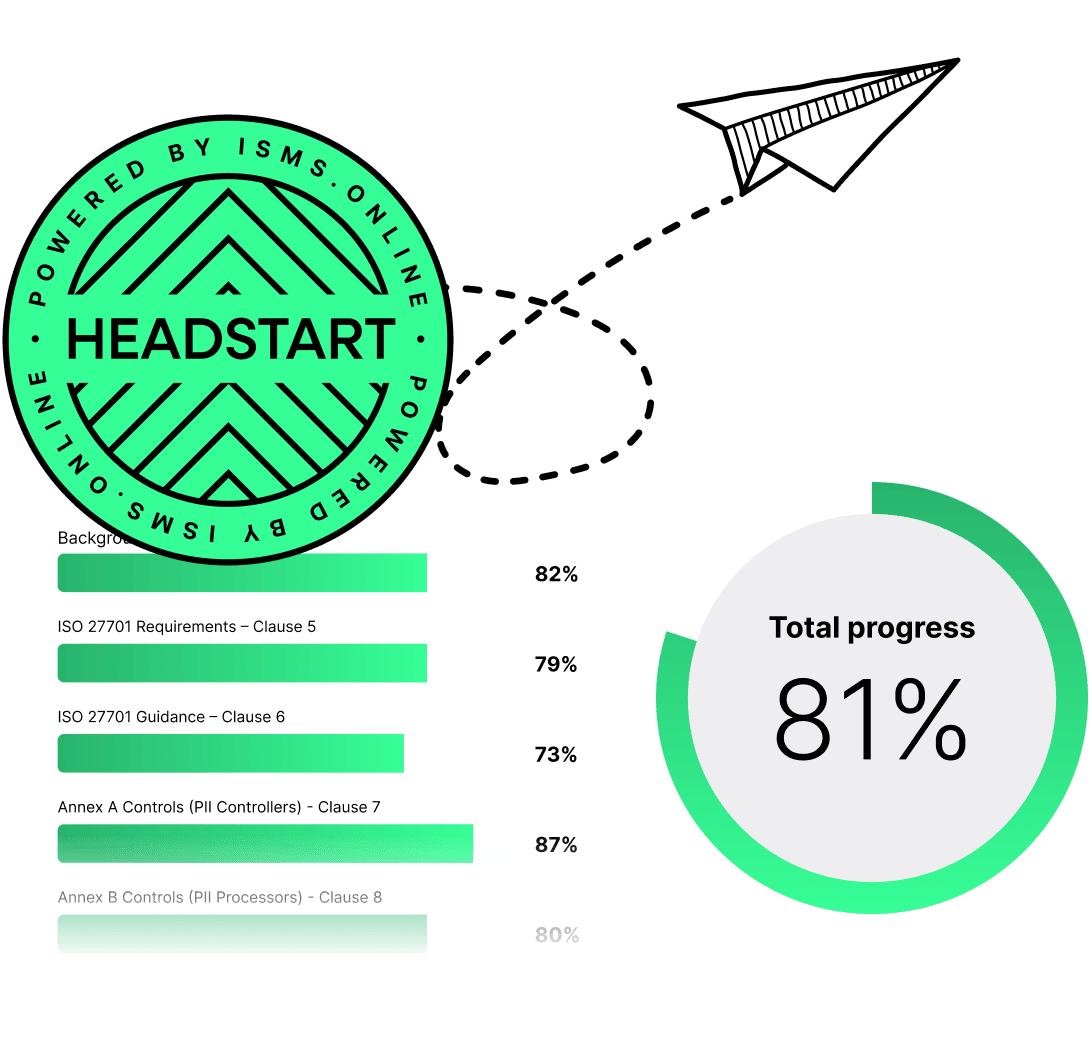
An 81% Headstart from day one
We’ve done the hard work for you, giving you an 81% Headstart from the moment you log on. All you have to do is fill in the blanks.
What Do These Changes Mean For You?
The new ISO 27002: 2022 is not a major revision. Therefore, you do not need to implement any radical changes to be compliant with the latest version of ISO 27002.
But if you’re planning your ISMS implementation (and possibly even contemplating an ISMS certification), it’s absolutely vital that you check out the new edition of ISO 27002 and make sure your security measures are up to date.
That said, you can get more information on how the new ISO 27002 will affect your information security processes and ISO 27001 certification by reading our ISO 27002:2022 guide.
New ISO 27002 Controls
| ISO/IEC 27002:2022 Control Identifier | ISO/IEC 27002:2013 Control Identifier | Control Name |
|---|---|---|
| 5.7 | NEW | Threat intelligence |
| 5.23 | NEW | Information security for use of cloud services |
| 5.30 | NEW | ICT readiness for business continuity |
| 7.4 | NEW | Physical security monitoring |
| 8.9 | NEW | Configuration management |
| 8.10 | NEW | Information deletion |
| 8.11 | NEW | Data masking |
| 8.12 | NEW | Data leakage prevention |
| 8.16 | NEW | Monitoring activities |
| 8.23 | NEW | Web filtering |
| 8.28 | NEW | Secure coding |
| ISO/IEC 27002:2022 Control Identifier | ISO/IEC 27002:2013 Control Identifier | Control Name |
|---|---|---|
| 6.1 | 07.1.1 | Screening |
| 6.2 | 07.1.2 | Terms and conditions of employment |
| 6.3 | 07.2.2 | Information security awareness, education and training |
| 6.4 | 07.2.3 | Disciplinary process |
| 6.5 | 07.3.1 | Responsibilities after termination or change of employment |
| 6.6 | 13.2.4 | Confidentiality or non-disclosure agreements |
| 6.7 | 06.2.2 | Remote working |
| 6.8 | 16.1.2, 16.1.3 | Information security event reporting |
| ISO/IEC 27002:2022 Control Identifier | ISO/IEC 27002:2013 Control Identifier | Control Name |
|---|---|---|
| 7.1 | 11.1.1 | Physical security perimeters |
| 7.2 | 11.1.2, 11.1.6 | Physical entry |
| 7.3 | 11.1.3 | Securing offices, rooms and facilities |
| 7.4 | NEW | Physical security monitoring |
| 7.5 | 11.1.4 | Protecting against physical and environmental threats |
| 7.6 | 11.1.5 | Working in secure areas |
| 7.7 | 11.2.9 | Clear desk and clear screen |
| 7.8 | 11.2.1 | Equipment siting and protection |
| 7.9 | 11.2.6 | Security of assets off-premises |
| 7.10 | 08.3.1, 08.3.2, 08.3.3, 11.2.5 | Storage media |
| 7.11 | 11.2.2 | Supporting utilities |
| 7.12 | 11.2.3 | Cabling security |
| 7.13 | 11.2.4 | Equipment maintenance |
| 7.14 | 11.2.7 | Secure disposal or re-use of equipment |
How ISMS.Online Helps
Whether you are new to ISO 27001/ 27002 or already certified, our user-friendly yet powerful cloud solution at ISMS.online will offer you with a full collection of tools and resources to help you manage your own ISMS.
ISO 27002 implementation is simpler with our step-by-step checklist that guides you through the whole process, from defining the scope of your ISMS through risk identification and control implementation.
Some of the key benefits of using ISMS.online include:
- You can build your ISO 27001 compliant ISMS within the platform.
- Users can complete tasks and submit evidence to demonstrate compliance with the standard.
- It’s easy to delegate responsibilities and monitor progress towards compliance.
- The extensive risk assessment toolset saves time and effort throughout the process.
- We have a dedicated team of consultants on hand to support you throughout your journey to compliance.
Our platform is built from the ground up to help you successfully achieve ISO 27001 certification, but also to make it as simple and straightforward as possible to maintain it once certified.
Our platform is intuitive and easy-to-use. It’s not just for highly technical people; it’s for everyone in your organisation. We encourage you to involve staff at all levels of your business in the process of building your ISMS, because that helps you to build a truly sustainable system.
Get in touch today to book a demo.