













- See ISO 27002:2022 Control 5.12 for more information.
- See ISO 27001:2013 Annex A 8.2.1 for more information.
ISO 27001:2022 Annex A 5.12 is a preventive control that asks you to sort information into protection levels based on confidentiality, integrity and availability needs and what relevant interested parties require. Each level then sets how the information is handled and protected.
What Is ISO 27001:2022 Annex A 5.12?
Under ISO 27001:2022 Annex A 5.12, the classification decision rests on the confidentiality, integrity and availability needs of the information and on what relevant interested parties, such as customers or regulators, require of it. The scheme should reflect the organisation’s own business activity without getting in the way of it.
- Classification (Annex A 5.12) decides which protection level a piece of information needs.
- Labelling (Annex A 5.13) marks the information with that level so that people and systems can see it.
For instance, information intended for public release sits in the lowest level, whereas confidential or commercially sensitive data is given a higher level and a higher degree of security. Getting classification right helps to ensure that organisational assets are protected, because the protection applied to each asset follows from its level.
What Is the Purpose of Annex A 5.12?
It helps organisations to identify and manage information risks by making clear how much protection each information asset needs, based on its importance to the organisation.
The supporting notes for control 5.12 in ISO/IEC 27002:2022 warn against both over-classification, which leads to unnecessary controls and extra cost, and under-classification, which leaves information without enough protection. This helps the classification scheme balance the business need to use information with the security requirements of each category.
Who Owns Information Classification Under Annex A 5.12?
While it is essential to establish a classification scheme for information assets throughout the entire organisation, it is ultimately the responsibility of the asset owners to ensure that it is applied correctly.
The ISO/IEC 27002:2022 guidance for control 5.12 says that owners of information should be accountable for how it is classified. For instance, the finance team, as owner of payroll reports and bank statements, should classify them using the organisation-wide classification scheme.
When classifying information, asset owners should consider the business needs and the potential impact that a compromise of information could have on the organisation. They should also account for the information’s importance and sensitivity.
ISO 27001 made easy
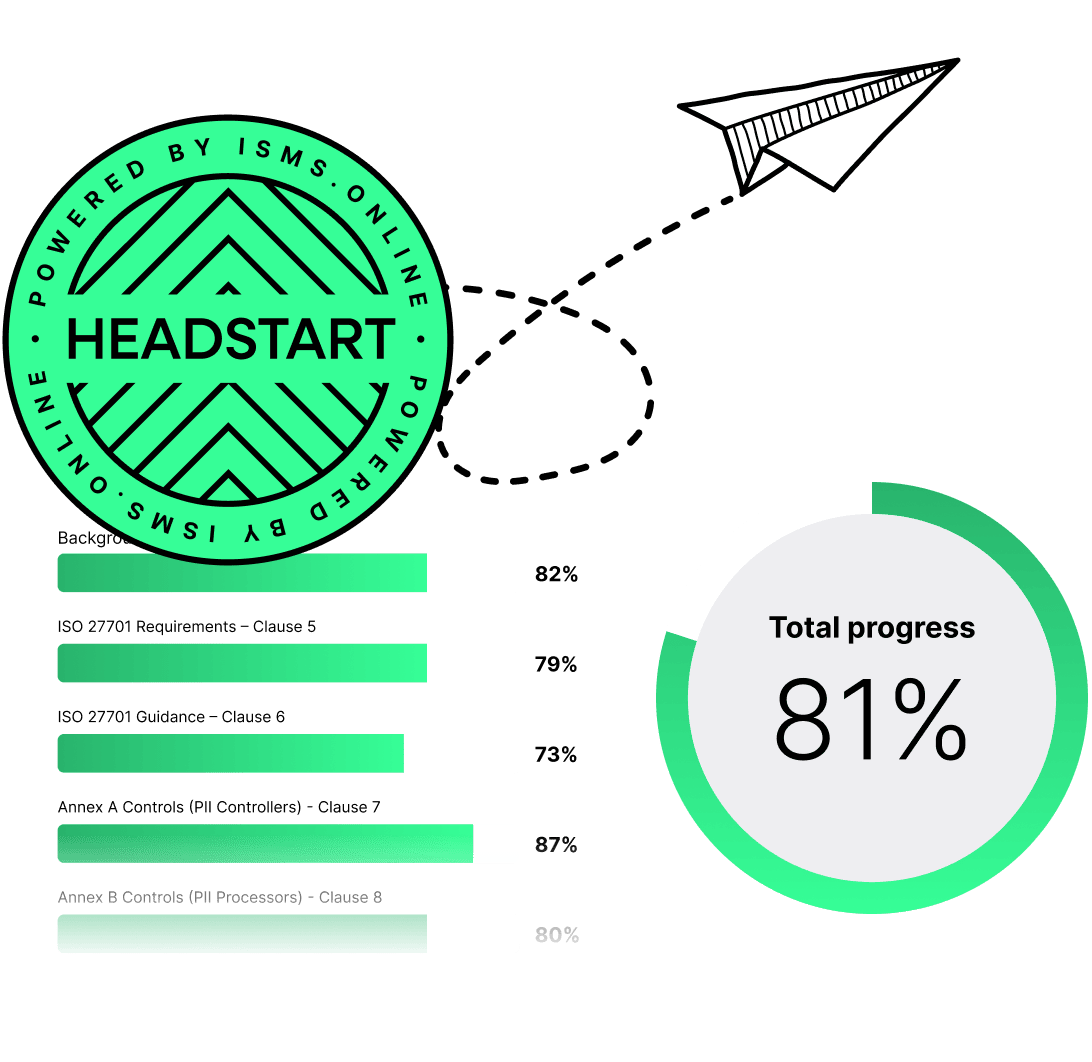
An 81% Headstart from day one
We’ve done the hard work for you, giving you an 81% Headstart from the moment you log on. All you have to do is fill in the blanks.
How Do You Classify Information Under ISO 27001?
To implement a robust information classification scheme, organisations should set a clear policy, consider each business unit’s specific information needs, and evaluate how sensitive and critical the information is.
The ISO/IEC 27002:2022 guidance for control 5.12 points to the following five areas when building a classification scheme:
Establish a Topic-Specific Policy and Address Specific Business Needs
The guidance asks organisations to set up a topic-specific policy on information classification and to share it with all relevant interested parties. The scheme should also fit with the access control rules the organisation has set in its own topic-specific policy. Topic-specific policies fall under Annex A 5.1 (Policies for information security), while access control itself is Annex A 5.15. In addition, the classification scheme and levels should reflect specific business needs when classifying information assets.
Organisations need to consider their business needs for sharing and using information, as well as the need for that information to be available. However, classifying an information asset may disrupt critical business functions by restricting access to and use of information.
Consider Legal Obligations
Specific laws may require organisations to safeguard the confidentiality, integrity or availability of certain information. Classifications and the protective controls attached to them should therefore take account of these legal requirements as well as business needs.
Adopting a risk-based approach and assessing the potential impact of a security breach or compromise on information assets is advisable. This will help prioritise and implement appropriate security measures to mitigate the identified risks.
When an organisation implements an information classification scheme, it can set each level by the potential impact that compromising the information’s confidentiality, integrity or availability would have on the organisation.
For instance, the sensitivity and potential impact of a database containing professional email addresses of qualified leads would be vastly different from that of employees’ health records. Therefore, the organisation should carefully consider the level of protection that each category of information requires and allocate resources accordingly.
Regularly Updating and Reviewing the Classification
Annex A Control 5.12 recognises that information’s value, importance and level of sensitivity can change over time as the data goes through its life cycle. The scheme should therefore include criteria for reviewing classifications, and organisations need to review their classification of information regularly and make any necessary updates.
Information can stop being sensitive or critical after a period of time. For example, once information has been made public it no longer needs confidentiality protection, although its integrity and availability may still need protecting.
Align Classification With the Organisations You Share Information With
Divergences in information classification between organisations can lead to potential risks when exchanging information assets. Two organisations can use the same level names, or even identical schemes, and still classify the same information differently.
Agreements with other organisations that involve sharing information should therefore set out how to identify the classification of that information and how to read the other organisation’s levels. Comparing the handling and protection methods attached to each level is a practical way to match levels between schemes.
Organisational-Level Consistency
Every department within an organisation must have a shared understanding of classification levels and procedures to ensure uniformity in classifications across the entire organisation. Building the scheme into the organisation’s procedures means everyone classifies information, and the assets that hold it, in the same way.

Free yourself from a mountain of spreadsheets
Embed, expand and scale your compliance, without the mess. IO gives you the resilience and confidence to grow securely.
What Are Examples of Information Classification Levels?
Annex A 5.12 acknowledges that there is no universally applicable classification system, and organisations are free to define their own levels. ISO/IEC 27002:2022 gives a four-level example for confidentiality, based on the harm that disclosure would cause. The table below sets out those four levels. The example labels and handling rules are illustrative only and are not taken from the standard.
| Level | Example label | Impact if disclosed | Example handling |
|---|---|---|---|
| 1 | Public | No harm | Can be published freely; protect it from unauthorised changes |
| 2 | Internal | Minor damage to reputation or minor effect on operations | Staff only; not shared outside the organisation without approval |
| 3 | Confidential | Significant short-term effect on operations or business objectives | Named teams on a need-to-know basis; protected when sent outside the organisation |
| 4 | Restricted | Serious harm to long-term business objectives, or a threat to the organisation’s survival | Named individuals only; strongest access controls; access recorded |
For step-by-step help with setting up these levels, see our guide on how to implement Annex A 5.12 classification of information.
What Should an Information Classification Policy Include?
An information classification policy turns the scheme into rules that people can follow. A typical policy covers:
- Scope and purpose: which information and other assets the policy applies to, and why.
- The classification scheme: the levels, their names and the impact criteria used to assign each one.
- Owner duties: who classifies each type of information and who is accountable for it.
- Labelling: how each level is marked on documents, files and systems (Annex A 5.13).
- Handling rules: how information at each level is stored, shared, transferred and disposed of.
- Links to access control: how the levels line up with the access control policy.
- Sharing with other organisations: how levels are matched with partners’ schemes.
- Review: when and how classifications are reviewed and changed over the information’s life cycle.
If you also manage personal data under a privacy information management system, see ISO 27701 clause 6.5.2 information classification.
What Changed From ISO 27001:2013 Annex A 8.2.1?
Annex A 8.2.1 in the previous version dealt with the Classification of Information.
The control wording itself changed. The 2013 control based classification on legal requirements, value, criticality, and how sensitive the information was to unauthorised disclosure or change.
The guidance is otherwise quite similar, but there are two main differences:
- Firstly, the previous version did not mention the need for consistency in classification levels when information is shared between organisations. The 2022 guidance asks organisations to agree with their counterparts how classifications are identified and interpreted.
- Secondly, the 2022 guidance asks organisations to set up a topic-specific policy on information classification. Only a brief reference to access control was made in the older version.
What Are All the ISO 27001:2022 Annex A Controls?
In the table below you’ll find more information on each individual ISO 27001:2022 Annex A Control.
| Annex A Control Type | ISO/IEC 27001:2022 Annex A Identifier | ISO/IEC 27001:2013 Annex A Identifier | Annex A Name |
|---|---|---|---|
| Organisational Controls | Annex A 5.1 |
Annex A 5.1.1 Annex A 5.1.2 |
Policies for Information Security |
| Organisational Controls | Annex A 5.2 | Annex A 6.1.1 | Information Security Roles and Responsibilities |
| Organisational Controls | Annex A 5.3 | Annex A 6.1.2 | Segregation of Duties |
| Organisational Controls | Annex A 5.4 | Annex A 7.2.1 | Management Responsibilities |
| Organisational Controls | Annex A 5.5 | Annex A 6.1.3 | Contact With Authorities |
| Organisational Controls | Annex A 5.6 | Annex A 6.1.4 | Contact With Special Interest Groups |
| Organisational Controls | Annex A 5.7 | NEW | Threat Intelligence |
| Organisational Controls | Annex A 5.8 |
Annex A 6.1.5 Annex A 14.1.1 |
Information Security in Project Management |
| Organisational Controls | Annex A 5.9 |
Annex A 8.1.1 Annex A 8.1.2 |
Inventory of Information and Other Associated Assets |
| Organisational Controls | Annex A 5.10 |
Annex A 8.1.3 Annex A 8.2.3 |
Acceptable Use of Information and Other Associated Assets |
| Organisational Controls | Annex A 5.11 | Annex A 8.1.4 | Return of Assets |
| Organisational Controls | Annex A 5.12 | Annex A 8.2.1 | Classification of Information |
| Organisational Controls | Annex A 5.13 | Annex A 8.2.2 | Labelling of Information |
| Organisational Controls | Annex A 5.14 |
Annex A 13.2.1 Annex A 13.2.2 Annex A 13.2.3 |
Information Transfer |
| Organisational Controls | Annex A 5.15 |
Annex A 9.1.1 Annex A 9.1.2 |
Access Control |
| Organisational Controls | Annex A 5.16 | Annex A 9.2.1 | Identity Management |
| Organisational Controls | Annex A 5.17 |
Annex A 9.2.4 Annex A 9.3.1 Annex A 9.4.3 |
Authentication Information |
| Organisational Controls | Annex A 5.18 |
Annex A 9.2.2 Annex A 9.2.5 Annex A 9.2.6 |
Access Rights |
| Organisational Controls | Annex A 5.19 | Annex A 15.1.1 | Information Security in Supplier Relationships |
| Organisational Controls | Annex A 5.20 | Annex A 15.1.2 | Addressing Information Security Within Supplier Agreements |
| Organisational Controls | Annex A 5.21 | Annex A 15.1.3 | Managing Information Security in the ICT Supply Chain |
| Organisational Controls | Annex A 5.22 |
Annex A 15.2.1 Annex A 15.2.2 |
Monitoring, Review and Change Management of Supplier Services |
| Organisational Controls | Annex A 5.23 | NEW | Information Security for Use of Cloud Services |
| Organisational Controls | Annex A 5.24 | Annex A 16.1.1 | Information Security Incident Management Planning and Preparation |
| Organisational Controls | Annex A 5.25 | Annex A 16.1.4 | Assessment and Decision on Information Security Events |
| Organisational Controls | Annex A 5.26 | Annex A 16.1.5 | Response to Information Security Incidents |
| Organisational Controls | Annex A 5.27 | Annex A 16.1.6 | Learning From Information Security Incidents |
| Organisational Controls | Annex A 5.28 | Annex A 16.1.7 | Collection of Evidence |
| Organisational Controls | Annex A 5.29 |
Annex A 17.1.1 Annex A 17.1.2 Annex A 17.1.3 |
Information Security During Disruption |
| Organisational Controls | Annex A 5.30 | NEW | ICT Readiness for Business Continuity |
| Organisational Controls | Annex A 5.31 |
Annex A 18.1.1 Annex A 18.1.5 |
Legal, Statutory, Regulatory and Contractual Requirements |
| Organisational Controls | Annex A 5.32 | Annex A 18.1.2 | Intellectual Property Rights |
| Organisational Controls | Annex A 5.33 | Annex A 18.1.3 | Protection of Records |
| Organisational Controls | Annex A 5.34 | Annex A 18.1.4 | Privacy and Protection of PII |
| Organisational Controls | Annex A 5.35 | Annex A 18.2.1 | Independent Review of Information Security |
| Organisational Controls | Annex A 5.36 |
Annex A 18.2.2 Annex A 18.2.3 |
Compliance With Policies, Rules and Standards for Information Security |
| Organisational Controls | Annex A 5.37 | Annex A 12.1.1 | Documented Operating Procedures |
| Annex A Control Type | ISO/IEC 27001:2022 Annex A Identifier | ISO/IEC 27001:2013 Annex A Identifier | Annex A Name |
|---|---|---|---|
| People Controls | Annex A 6.1 | Annex A 7.1.1 | Screening |
| People Controls | Annex A 6.2 | Annex A 7.1.2 | Terms and Conditions of Employment |
| People Controls | Annex A 6.3 | Annex A 7.2.2 | Information Security Awareness, Education and Training |
| People Controls | Annex A 6.4 | Annex A 7.2.3 | Disciplinary Process |
| People Controls | Annex A 6.5 | Annex A 7.3.1 | Responsibilities After Termination or Change of Employment |
| People Controls | Annex A 6.6 | Annex A 13.2.4 | Confidentiality or Non-Disclosure Agreements |
| People Controls | Annex A 6.7 | Annex A 6.2.2 | Remote Working |
| People Controls | Annex A 6.8 |
Annex A 16.1.2 Annex A 16.1.3 |
Information Security Event Reporting |
| Annex A Control Type | ISO/IEC 27001:2022 Annex A Identifier | ISO/IEC 27001:2013 Annex A Identifier | Annex A Name |
|---|---|---|---|
| Physical Controls | Annex A 7.1 | Annex A 11.1.1 | Physical Security Perimeters |
| Physical Controls | Annex A 7.2 |
Annex A 11.1.2 Annex A 11.1.6 |
Physical Entry |
| Physical Controls | Annex A 7.3 | Annex A 11.1.3 | Securing Offices, Rooms and Facilities |
| Physical Controls | Annex A 7.4 | NEW | Physical Security Monitoring |
| Physical Controls | Annex A 7.5 | Annex A 11.1.4 | Protecting Against Physical and Environmental Threats |
| Physical Controls | Annex A 7.6 | Annex A 11.1.5 | Working In Secure Areas |
| Physical Controls | Annex A 7.7 | Annex A 11.2.9 | Clear Desk and Clear Screen |
| Physical Controls | Annex A 7.8 | Annex A 11.2.1 | Equipment Siting and Protection |
| Physical Controls | Annex A 7.9 | Annex A 11.2.6 | Security of Assets Off-Premises |
| Physical Controls | Annex A 7.10 |
Annex A 8.3.1 Annex A 8.3.2 Annex A 8.3.3 Annex A 11.2.5 |
Storage Media |
| Physical Controls | Annex A 7.11 | Annex A 11.2.2 | Supporting Utilities |
| Physical Controls | Annex A 7.12 | Annex A 11.2.3 | Cabling Security |
| Physical Controls | Annex A 7.13 | Annex A 11.2.4 | Equipment Maintenance |
| Physical Controls | Annex A 7.14 | Annex A 11.2.7 | Secure Disposal or Re-Use of Equipment |
| Annex A Control Type | ISO/IEC 27001:2022 Annex A Identifier | ISO/IEC 27001:2013 Annex A Identifier | Annex A Name |
|---|---|---|---|
| Technological Controls | Annex A 8.1 |
Annex A 6.2.1 Annex A 11.2.8 |
User Endpoint Devices |
| Technological Controls | Annex A 8.2 | Annex A 9.2.3 | Privileged Access Rights |
| Technological Controls | Annex A 8.3 | Annex A 9.4.1 | Information Access Restriction |
| Technological Controls | Annex A 8.4 | Annex A 9.4.5 | Access to Source Code |
| Technological Controls | Annex A 8.5 | Annex A 9.4.2 | Secure Authentication |
| Technological Controls | Annex A 8.6 | Annex A 12.1.3 | Capacity Management |
| Technological Controls | Annex A 8.7 | Annex A 12.2.1 | Protection Against Malware |
| Technological Controls | Annex A 8.8 |
Annex A 12.6.1 Annex A 18.2.3 |
Management of Technical Vulnerabilities |
| Technological Controls | Annex A 8.9 | NEW | Configuration Management |
| Technological Controls | Annex A 8.10 | NEW | Information Deletion |
| Technological Controls | Annex A 8.11 | NEW | Data Masking |
| Technological Controls | Annex A 8.12 | NEW | Data Leakage Prevention |
| Technological Controls | Annex A 8.13 | Annex A 12.3.1 | Information Backup |
| Technological Controls | Annex A 8.14 | Annex A 17.2.1 | Redundancy of Information Processing Facilities |
| Technological Controls | Annex A 8.15 |
Annex A 12.4.1 Annex A 12.4.2 Annex A 12.4.3 |
Logging |
| Technological Controls | Annex A 8.16 | NEW | Monitoring Activities |
| Technological Controls | Annex A 8.17 | Annex A 12.4.4 | Clock Synchronization |
| Technological Controls | Annex A 8.18 | Annex A 9.4.4 | Use of Privileged Utility ProgramsAccess Rights |
| Technological Controls | Annex A 8.19 |
Annex A 12.5.1 Annex A 12.6.2 |
Installation of Software on Operational Systems |
| Technological Controls | Annex A 8.20 | Annex A 13.1.1 | Networks Security |
| Technological Controls | Annex A 8.21 | Annex A 13.1.2 | Security of Network Services |
| Technological Controls | Annex A 8.22 | Annex A 13.1.3 | Segregation of Networks |
| Technological Controls | Annex A 8.23 | NEW | Web filtering |
| Technological Controls | Annex A 8.24 |
Annex A 10.1.1 Annex A 10.1.2 |
Use of Cryptography |
| Technological Controls | Annex A 8.25 | Annex A 14.2.1 | Secure Development Life Cycle |
| Technological Controls | Annex A 8.26 |
Annex A 14.1.2 Annex A 14.1.3 |
Application Security Requirements |
| Technological Controls | Annex A 8.27 | Annex A 14.2.5 | Secure System Architecture and Engineering PrinciplesLearning From Information Security Incidents |
| Technological Controls | Annex A 8.28 | NEW | Secure Coding |
| Technological Controls | Annex A 8.29 |
Annex A 14.2.8 Annex A 14.2.9 |
Security Testing in Development and Acceptance |
| Technological Controls | Annex A 8.30 | Annex A 14.2.7 | Outsourced Development |
| Technological Controls | Annex A 8.31 |
Annex A 12.1.4 Annex A 14.2.6 |
Separation of Development, Test and Production Environments |
| Technological Controls | Annex A 8.32 |
Annex A 12.1.2 Annex A 14.2.2 Annex A 14.2.3 Annex A 14.2.4 |
Change Management |
| Technological Controls | Annex A 8.33 | Annex A 14.3.1 | Test Information |
| Technological Controls | Annex A 8.34 | Annex A 12.7.1 | Protection of Information Systems During Audit Testing |
Why Choose ISMS.online for Annex A 5.12?
ISMS.online helps you put information classification into practice as part of your wider ISMS. With it you can:
- Work in a platform designed to be user-friendly and straightforward.
- Bring highly technical people and every other member of staff into the same system.
- Involve employees at all levels of the business in building your ISMS, which helps make it sustainable.
- Identify and manage information risks.
- Centralise your compliance management in one platform.
- Embed, expand and scale your compliance without the mess of spreadsheets.
To see how ISMS.online can help you classify and protect your information under Annex A 5.12, book a demo.
FAQs
How does Annex A 5.12 relate to ISO 27002 control 5.12?
They cover the same control. ISO 27001:2022 Annex A 5.12 sets out what the control is, and ISO/IEC 27002:2022 control 5.12 gives the guidance on putting it into practice. The five areas for building a scheme and the four-level example on this page both come from that guidance.
Which other Annex A controls work alongside Annex A 5.12?
Annex A 5.1 (Policies for information security) covers the topic-specific policy on classification. Annex A 5.9 covers the inventory of information and other associated assets that you classify. Annex A 5.13 (Labelling of information) marks information with its level, and Annex A 5.15 (Access control) should line up with your classification levels.
Do assets other than information need a classification?
Yes. Other assets, such as the systems and files that hold information, can be classified in line with the information they hold.

NHS Professionals achieves ISO 27001 certification and improves their infosec management
Facing a tight six-month deadline and multiple existing frameworks to integrate, NHS Professionals needed a platform that could incorporate ISO 27001 without duplicating policies or adding risk to their already complex compliance landscape.

Xergy tool Proteus generates growth through ISO 27001 compliance using ISMS.online
As a start-up building software for highly regulated engineering sectors, Xergy needed ISO 27001 to generate growth through trust — and a proven external partner to handle the rigorous requirements without diverting the dev team.

How MAAS Aviation Built a Robust and Sustainable ISO 27001-Compliant ISMS
MAAS Aviation required strong technical foundations to support ISO 27001 alignment, and a platform to centralise compliance management.

How Blue Services Achieved Triple ISO Certification Success
Blue Services needed external support to guide them through ISO 27001, ISO 9001 and ISO 14001 implementation and best practices, and a platform to centralise their overall compliance management.

How Evolution Funding Cruised to ISO 27001 Certification Success
Achieving ISO 27001 certification was a core objective for Evolution Funding. The team needed a centralised platform with which they could implement the ISO 27001 standard and work through the compliance process.

How 4way Consulting Paved the Road to ISO 27001 Success
Handling sensitive client data across multiple standards, 4way needed a cost and time-efficient way to pursue ISO 27001 – without building an ISMS from scratch or relying on expensive external consultants.