





































- See ISO 27002:2022 Control 5.26 for more information.
- See ISO 27001:2013 Annex A 16.1.5 for more information.
What Is the Objective of ISO 27001:2022 Annex A 5.26?
Annex A 5.26 is about managing information security incidents, events and weaknesses.
Organisations can maximise the chances of a fast, effective resolution by ensuring that internal and external personnel are fully engaged with published incident management processes and procedures (primarily those created in Annex A Control 5.24).
Ownership of Annex A 5.26
Ideally, Annex A Control 5.26 should be owned by a senior management team member whose responsibilities include overseeing all incident management-related activities, such as the COO.
To drive performance management and eliminate errors, it is also crucial that the owner has direct or indirect control over the performance of personnel involved in analysing and resolving information security incidents.
ISO 27001 made easy
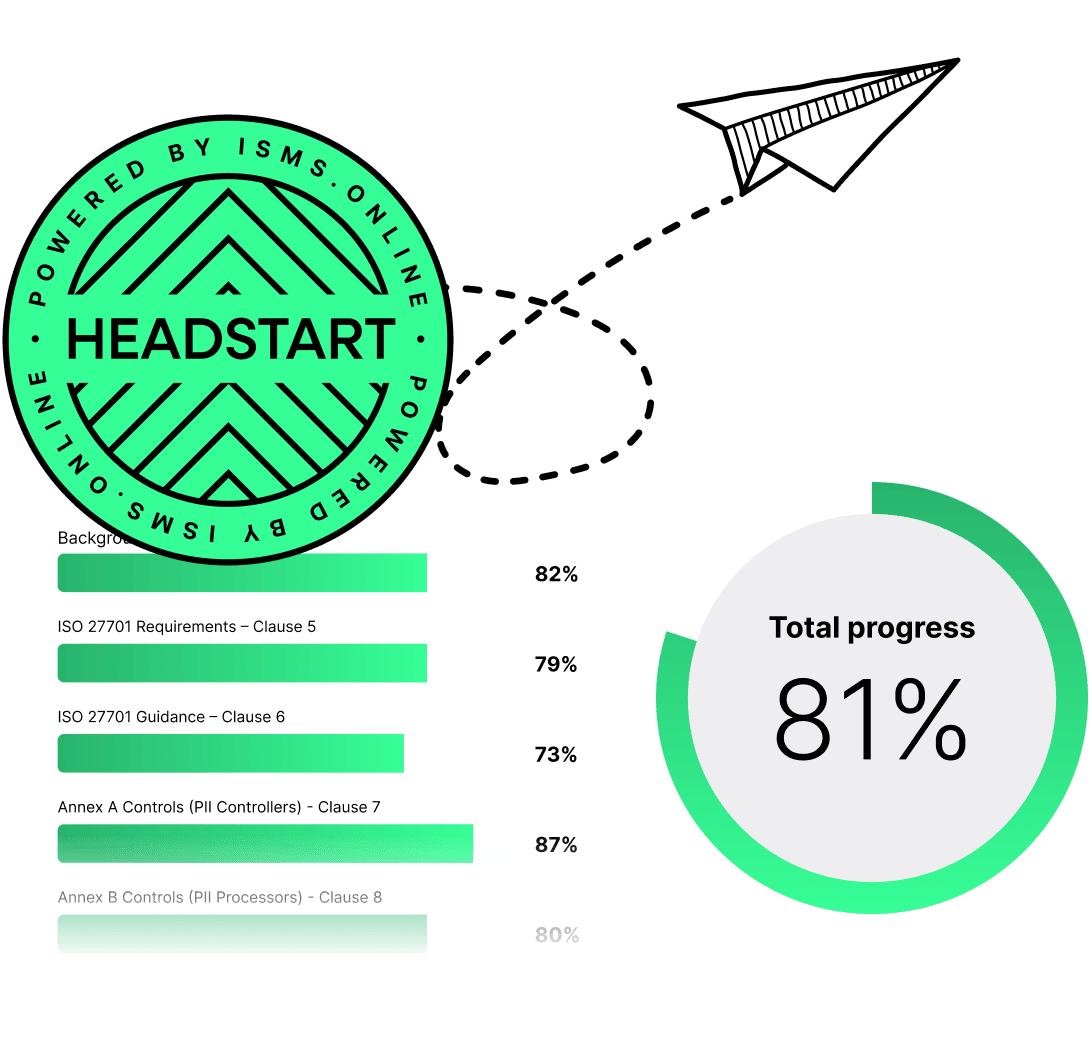
An 81% Headstart from day one
We’ve done the hard work for you, giving you an 81% Headstart from the moment you log on. All you have to do is fill in the blanks.
General Guidance on ISO 27001:2022 Annex A 5.26
If you have other stakeholders and regulators to consider, it is important to assign owners, clarify actions and timescales, and keep the information for audit purposes. ISO 27001 follows the same rules as everything else. It will be the responsibility of the individual dealing with the security event to restore normal security levels.
To ensure prompt and thorough resolution of any information security incidents, a dedicated team should handle each incident with the “required competency” (see Annex A Control 5.26).
As outlined in Annex A Control 5.26, incident management procedures should follow ten main guidelines:
- Any threats arising from the original event are contained and mitigated.
- Evidence should be collected and corroborated in the immediate aftermath of an information security incident.
- Planned escalation, including crisis management (see Annex A Controls 5.29 and 5.30) and business continuity (see Annex A Controls 5.29 and 5.30).
- Post-mortem analysis requires accurate logging of all incident-related activity, including the initial response.
- Information security-related incidents should be communicated strictly according to the “need to know” principle.
- When communicating the broader impact of information security incidents, it is crucial to be mindful of an organisation’s responsibilities towards external organisations (clients, vendors, public bodies, regulators, etc.).
- An incident must meet strict completion criteria in order to be closed.
- As per Annex A Control 5.28, forensic analysis is performed.
- As soon as an incident has been resolved, the underlying cause needs to be identified, recorded, and communicated to all relevant parties (see Annex A Control 5.27).
- Addressing the underlying vulnerabilities that led to incidents and events related to information security, including identification and modification of internal processes, controls, policies, and procedures.
Supporting Annex A Controls
- ISO 27001:2022 Annex A 5.24
- ISO 27001:2022 Annex A 5.27
- ISO 27001:2022 Annex A 5.28
- ISO 27001:2022 Annex A 5.29
- ISO 27001:2022 Annex A 5.30

Free yourself from a mountain of spreadsheets
Embed, expand and scale your compliance, without the mess. IO gives you the resilience and confidence to grow securely.
What Are the Changes and Differences From ISO 27001:2013?
As of 27001:2022 Annex A 5.26, Annex A 16.1.5 (Response to Information Security Incidents) has been replaced by 27001:2022 Annex A 5.26.
Compared with ISO 27001:2013 Annex A 16.1.5, ISO 27001:2022 Annex A 5.26 adds four areas for consideration:
- In the wake of the original event, it is necessary to contain and mitigate threats.
- A crisis management and continuity of business escalation procedure.
- Identify the exact reason for the incident, and inform all relevant parties of the details.
- The process, control, and policy changes that led to the original incident must be identified and modified.
An incident response team’s primary goal in the early stages of an escalation is to return to a “normal security level”. In contrast, 27001:2022 Annex A 5.26 does not refer to resuming a “normal security level.”.
Table of All ISO 27001:2022 Annex A Controls
In the table below you’ll find more information on each individual ISO 27001:2022 Annex A Control.
| Annex A Control Type | ISO/IEC 27001:2022 Annex A Identifier | ISO/IEC 27001:2013 Annex A Identifier | Annex A Name |
|---|---|---|---|
| Organisational Controls | Annex A 5.1 |
Annex A 5.1.1 Annex A 5.1.2 |
Policies for Information Security |
| Organisational Controls | Annex A 5.2 | Annex A 6.1.1 | Information Security Roles and Responsibilities |
| Organisational Controls | Annex A 5.3 | Annex A 6.1.2 | Segregation of Duties |
| Organisational Controls | Annex A 5.4 | Annex A 7.2.1 | Management Responsibilities |
| Organisational Controls | Annex A 5.5 | Annex A 6.1.3 | Contact With Authorities |
| Organisational Controls | Annex A 5.6 | Annex A 6.1.4 | Contact With Special Interest Groups |
| Organisational Controls | Annex A 5.7 | NEW | Threat Intelligence |
| Organisational Controls | Annex A 5.8 |
Annex A 6.1.5 Annex A 14.1.1 |
Information Security in Project Management |
| Organisational Controls | Annex A 5.9 |
Annex A 8.1.1 Annex A 8.1.2 |
Inventory of Information and Other Associated Assets |
| Organisational Controls | Annex A 5.10 |
Annex A 8.1.3 Annex A 8.2.3 |
Acceptable Use of Information and Other Associated Assets |
| Organisational Controls | Annex A 5.11 | Annex A 8.1.4 | Return of Assets |
| Organisational Controls | Annex A 5.12 | Annex A 8.2.1 | Classification of Information |
| Organisational Controls | Annex A 5.13 | Annex A 8.2.2 | Labelling of Information |
| Organisational Controls | Annex A 5.14 |
Annex A 13.2.1 Annex A 13.2.2 Annex A 13.2.3 |
Information Transfer |
| Organisational Controls | Annex A 5.15 |
Annex A 9.1.1 Annex A 9.1.2 |
Access Control |
| Organisational Controls | Annex A 5.16 | Annex A 9.2.1 | Identity Management |
| Organisational Controls | Annex A 5.17 |
Annex A 9.2.4 Annex A 9.3.1 Annex A 9.4.3 |
Authentication Information |
| Organisational Controls | Annex A 5.18 |
Annex A 9.2.2 Annex A 9.2.5 Annex A 9.2.6 |
Access Rights |
| Organisational Controls | Annex A 5.19 | Annex A 15.1.1 | Information Security in Supplier Relationships |
| Organisational Controls | Annex A 5.20 | Annex A 15.1.2 | Addressing Information Security Within Supplier Agreements |
| Organisational Controls | Annex A 5.21 | Annex A 15.1.3 | Managing Information Security in the ICT Supply Chain |
| Organisational Controls | Annex A 5.22 |
Annex A 15.2.1 Annex A 15.2.2 |
Monitoring, Review and Change Management of Supplier Services |
| Organisational Controls | Annex A 5.23 | NEW | Information Security for Use of Cloud Services |
| Organisational Controls | Annex A 5.24 | Annex A 16.1.1 | Information Security Incident Management Planning and Preparation |
| Organisational Controls | Annex A 5.25 | Annex A 16.1.4 | Assessment and Decision on Information Security Events |
| Organisational Controls | Annex A 5.26 | Annex A 16.1.5 | Response to Information Security Incidents |
| Organisational Controls | Annex A 5.27 | Annex A 16.1.6 | Learning From Information Security Incidents |
| Organisational Controls | Annex A 5.28 | Annex A 16.1.7 | Collection of Evidence |
| Organisational Controls | Annex A 5.29 |
Annex A 17.1.1 Annex A 17.1.2 Annex A 17.1.3 |
Information Security During Disruption |
| Organisational Controls | Annex A 5.30 | NEW | ICT Readiness for Business Continuity |
| Organisational Controls | Annex A 5.31 |
Annex A 18.1.1 Annex A 18.1.5 |
Legal, Statutory, Regulatory and Contractual Requirements |
| Organisational Controls | Annex A 5.32 | Annex A 18.1.2 | Intellectual Property Rights |
| Organisational Controls | Annex A 5.33 | Annex A 18.1.3 | Protection of Records |
| Organisational Controls | Annex A 5.34 | Annex A 18.1.4 | Privacy and Protection of PII |
| Organisational Controls | Annex A 5.35 | Annex A 18.2.1 | Independent Review of Information Security |
| Organisational Controls | Annex A 5.36 |
Annex A 18.2.2 Annex A 18.2.3 |
Compliance With Policies, Rules and Standards for Information Security |
| Organisational Controls | Annex A 5.37 | Annex A 12.1.1 | Documented Operating Procedures |
| Annex A Control Type | ISO/IEC 27001:2022 Annex A Identifier | ISO/IEC 27001:2013 Annex A Identifier | Annex A Name |
|---|---|---|---|
| People Controls | Annex A 6.1 | Annex A 7.1.1 | Screening |
| People Controls | Annex A 6.2 | Annex A 7.1.2 | Terms and Conditions of Employment |
| People Controls | Annex A 6.3 | Annex A 7.2.2 | Information Security Awareness, Education and Training |
| People Controls | Annex A 6.4 | Annex A 7.2.3 | Disciplinary Process |
| People Controls | Annex A 6.5 | Annex A 7.3.1 | Responsibilities After Termination or Change of Employment |
| People Controls | Annex A 6.6 | Annex A 13.2.4 | Confidentiality or Non-Disclosure Agreements |
| People Controls | Annex A 6.7 | Annex A 6.2.2 | Remote Working |
| People Controls | Annex A 6.8 |
Annex A 16.1.2 Annex A 16.1.3 |
Information Security Event Reporting |
| Annex A Control Type | ISO/IEC 27001:2022 Annex A Identifier | ISO/IEC 27001:2013 Annex A Identifier | Annex A Name |
|---|---|---|---|
| Physical Controls | Annex A 7.1 | Annex A 11.1.1 | Physical Security Perimeters |
| Physical Controls | Annex A 7.2 |
Annex A 11.1.2 Annex A 11.1.6 |
Physical Entry |
| Physical Controls | Annex A 7.3 | Annex A 11.1.3 | Securing Offices, Rooms and Facilities |
| Physical Controls | Annex A 7.4 | NEW | Physical Security Monitoring |
| Physical Controls | Annex A 7.5 | Annex A 11.1.4 | Protecting Against Physical and Environmental Threats |
| Physical Controls | Annex A 7.6 | Annex A 11.1.5 | Working In Secure Areas |
| Physical Controls | Annex A 7.7 | Annex A 11.2.9 | Clear Desk and Clear Screen |
| Physical Controls | Annex A 7.8 | Annex A 11.2.1 | Equipment Siting and Protection |
| Physical Controls | Annex A 7.9 | Annex A 11.2.6 | Security of Assets Off-Premises |
| Physical Controls | Annex A 7.10 |
Annex A 8.3.1 Annex A 8.3.2 Annex A 8.3.3 Annex A 11.2.5 |
Storage Media |
| Physical Controls | Annex A 7.11 | Annex A 11.2.2 | Supporting Utilities |
| Physical Controls | Annex A 7.12 | Annex A 11.2.3 | Cabling Security |
| Physical Controls | Annex A 7.13 | Annex A 11.2.4 | Equipment Maintenance |
| Physical Controls | Annex A 7.14 | Annex A 11.2.7 | Secure Disposal or Re-Use of Equipment |
| Annex A Control Type | ISO/IEC 27001:2022 Annex A Identifier | ISO/IEC 27001:2013 Annex A Identifier | Annex A Name |
|---|---|---|---|
| Technological Controls | Annex A 8.1 |
Annex A 6.2.1 Annex A 11.2.8 |
User Endpoint Devices |
| Technological Controls | Annex A 8.2 | Annex A 9.2.3 | Privileged Access Rights |
| Technological Controls | Annex A 8.3 | Annex A 9.4.1 | Information Access Restriction |
| Technological Controls | Annex A 8.4 | Annex A 9.4.5 | Access to Source Code |
| Technological Controls | Annex A 8.5 | Annex A 9.4.2 | Secure Authentication |
| Technological Controls | Annex A 8.6 | Annex A 12.1.3 | Capacity Management |
| Technological Controls | Annex A 8.7 | Annex A 12.2.1 | Protection Against Malware |
| Technological Controls | Annex A 8.8 |
Annex A 12.6.1 Annex A 18.2.3 |
Management of Technical Vulnerabilities |
| Technological Controls | Annex A 8.9 | NEW | Configuration Management |
| Technological Controls | Annex A 8.10 | NEW | Information Deletion |
| Technological Controls | Annex A 8.11 | NEW | Data Masking |
| Technological Controls | Annex A 8.12 | NEW | Data Leakage Prevention |
| Technological Controls | Annex A 8.13 | Annex A 12.3.1 | Information Backup |
| Technological Controls | Annex A 8.14 | Annex A 17.2.1 | Redundancy of Information Processing Facilities |
| Technological Controls | Annex A 8.15 |
Annex A 12.4.1 Annex A 12.4.2 Annex A 12.4.3 |
Logging |
| Technological Controls | Annex A 8.16 | NEW | Monitoring Activities |
| Technological Controls | Annex A 8.17 | Annex A 12.4.4 | Clock Synchronization |
| Technological Controls | Annex A 8.18 | Annex A 9.4.4 | Use of Privileged Utility ProgramsAccess Rights |
| Technological Controls | Annex A 8.19 |
Annex A 12.5.1 Annex A 12.6.2 |
Installation of Software on Operational Systems |
| Technological Controls | Annex A 8.20 | Annex A 13.1.1 | Networks Security |
| Technological Controls | Annex A 8.21 | Annex A 13.1.2 | Security of Network Services |
| Technological Controls | Annex A 8.22 | Annex A 13.1.3 | Segregation of Networks |
| Technological Controls | Annex A 8.23 | NEW | Web filtering |
| Technological Controls | Annex A 8.24 |
Annex A 10.1.1 Annex A 10.1.2 |
Use of Cryptography |
| Technological Controls | Annex A 8.25 | Annex A 14.2.1 | Secure Development Life Cycle |
| Technological Controls | Annex A 8.26 |
Annex A 14.1.2 Annex A 14.1.3 |
Application Security Requirements |
| Technological Controls | Annex A 8.27 | Annex A 14.2.5 | Secure System Architecture and Engineering PrinciplesLearning From Information Security Incidents |
| Technological Controls | Annex A 8.28 | NEW | Secure Coding |
| Technological Controls | Annex A 8.29 |
Annex A 14.2.8 Annex A 14.2.9 |
Security Testing in Development and Acceptance |
| Technological Controls | Annex A 8.30 | Annex A 14.2.7 | Outsourced Development |
| Technological Controls | Annex A 8.31 |
Annex A 12.1.4 Annex A 14.2.6 |
Separation of Development, Test and Production Environments |
| Technological Controls | Annex A 8.32 |
Annex A 12.1.2 Annex A 14.2.2 Annex A 14.2.3 Annex A 14.2.4 |
Change Management |
| Technological Controls | Annex A 8.33 | Annex A 14.3.1 | Test Information |
| Technological Controls | Annex A 8.34 | Annex A 12.7.1 | Protection of Information Systems During Audit Testing |

NHS Professionals achieves ISO 27001 certification and improves their infosec management
Facing a tight six-month deadline and multiple existing frameworks to integrate, NHS Professionals needed a platform that could incorporate ISO 27001 without duplicating policies or adding risk to their already complex compliance landscape.

Xergy tool Proteus generates growth through ISO 27001 compliance using ISMS.online
As a start-up building software for highly regulated engineering sectors, Xergy needed ISO 27001 to generate growth through trust — and a proven external partner to handle the rigorous requirements without diverting the dev team.
How Blue Services Achieved Triple ISO Certification Success
Blue Services needed external support to guide them through ISO 27001, ISO 9001 and ISO 14001 implementation and best practices, and a platform to centralise their overall compliance management.

How Evolution Funding Cruised to ISO 27001 Certification Success
Achieving ISO 27001 certification was a core objective for Evolution Funding. The team needed a centralised platform with which they could implement the ISO 27001 standard and work through the compliance process.

How 4way Consulting Paved the Road to ISO 27001 Success
Handling sensitive client data across multiple standards, 4way needed a cost and time-efficient way to pursue ISO 27001 – without building an ISMS from scratch or relying on expensive external consultants.
nesevo’s Multi-Certification Compliance Success with IO
Struggling to manage ISO 27001 compliance across scattered documents and spreadsheets, nesevo needed a centralised platform that could guide them through the standard without the ongoing cost of external consultants.
What Are the Benefits of ISMS.online for Incident Management in Information Security?
This Annex A control objective has been made extremely easy by ISMS.online with its integrated policy that addresses 16.1.1 – 16.1.7 throughout the lifecycle and the built-in tools that make demonstrating the work very simple. ISMS.online provides a Security Incident Management Tool that simplifies managing information security incidents into a simple, effortless process. This ensures that compliance with the standard is achieved in a pragmatic yet compliant manner.
Similarly to other parts of ISMS.online, you can quickly adapt it to suit your needs. All your work is kept in one place with its elegant integration with related parts of the ISMS. Providing prebuilt statistics and reporting insights simplifies management reviews, reducing time. Should you consider an incident in relation to an improvement, a risk, an audit, or information assets and policies? That’s easy and avoids duplication. The headline in the Security Incident Track is shown below, which helps surface all the work going on. It is easy to filter them and manage resources, categories and incident types to ensure you focus on the most important ones.
You can use the ISMS.online platform to deploy and manage an ISO 27001 Information Security Management System regardless of your previous experience.
With our system, you will be guided through the steps needed to set up and maintain your ISMS effectively.
Get in touch today to book a demo.
